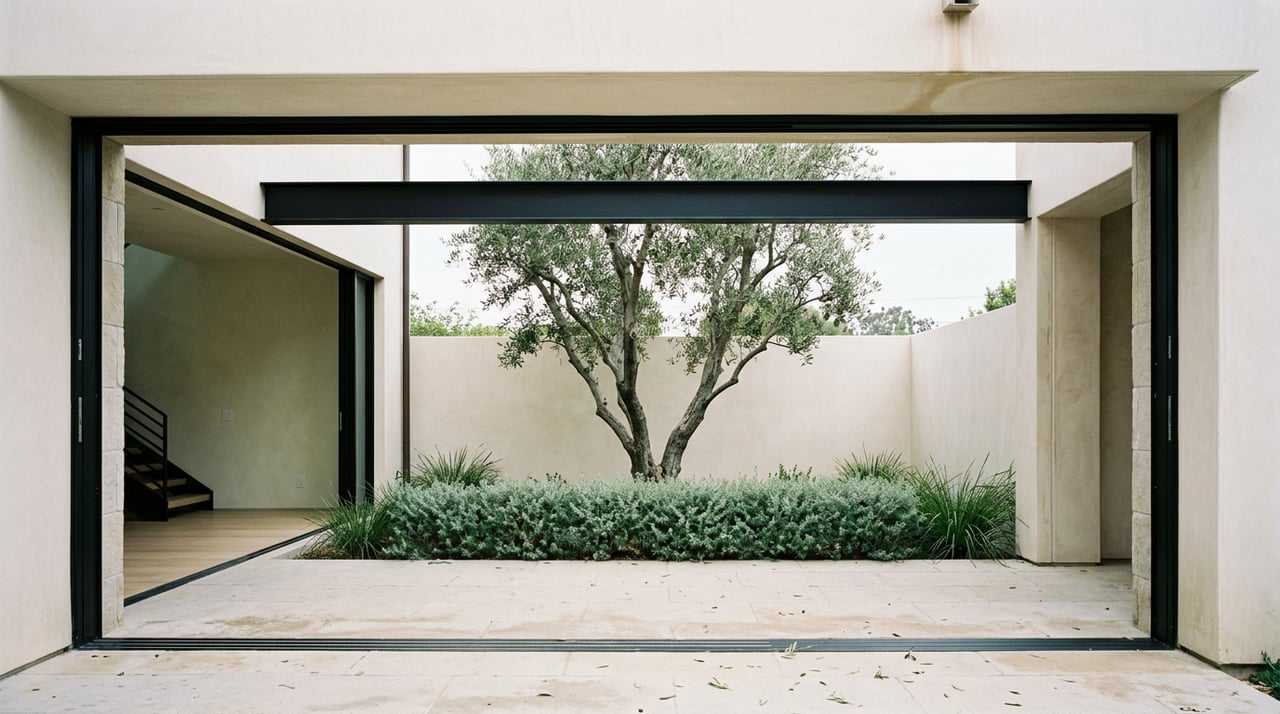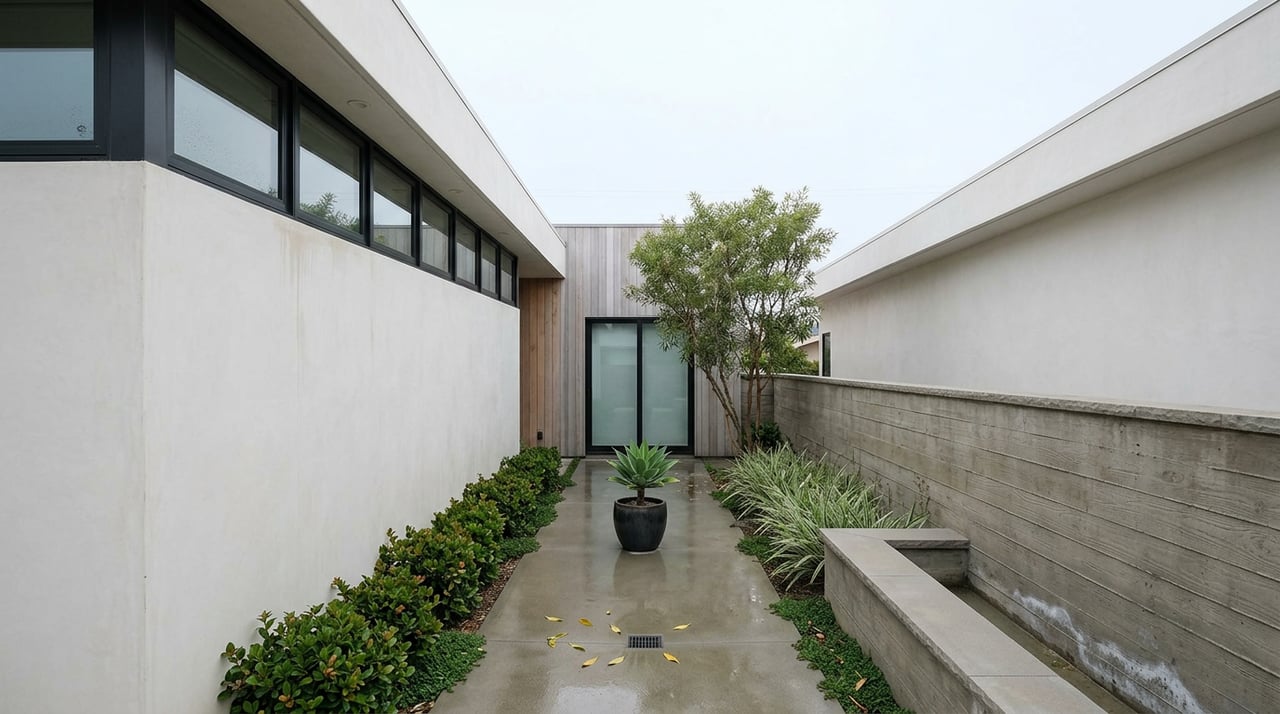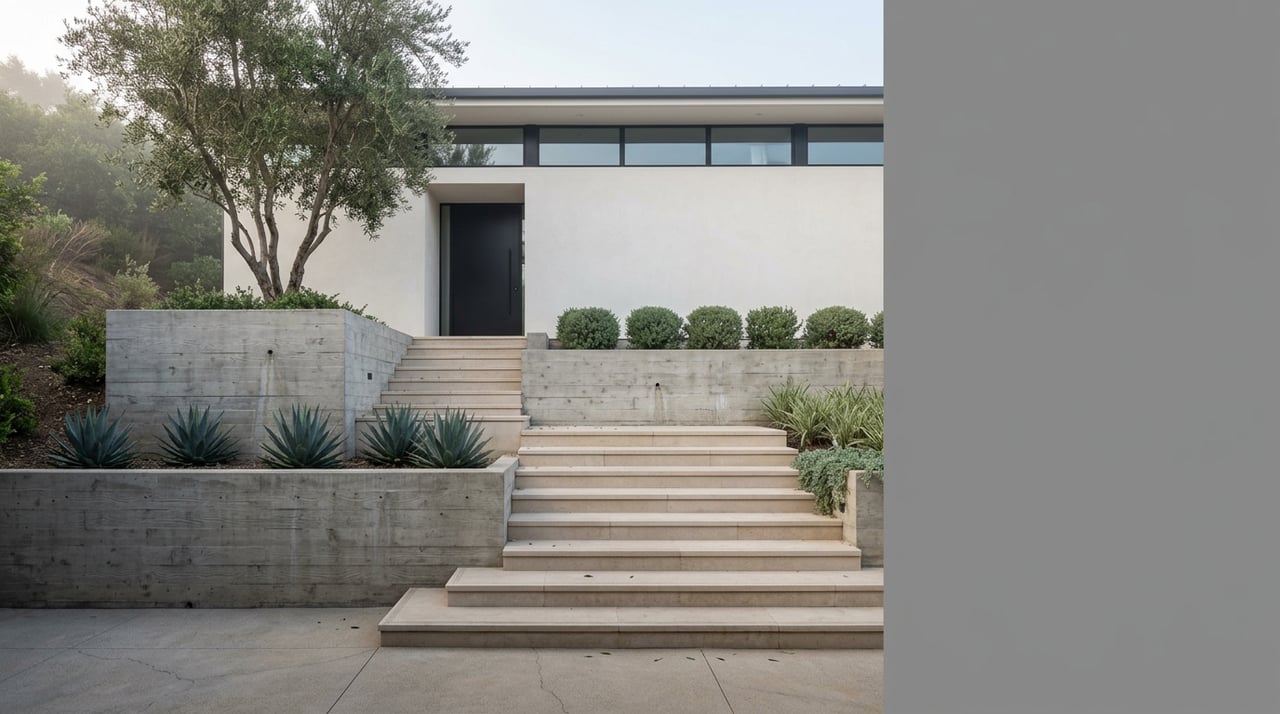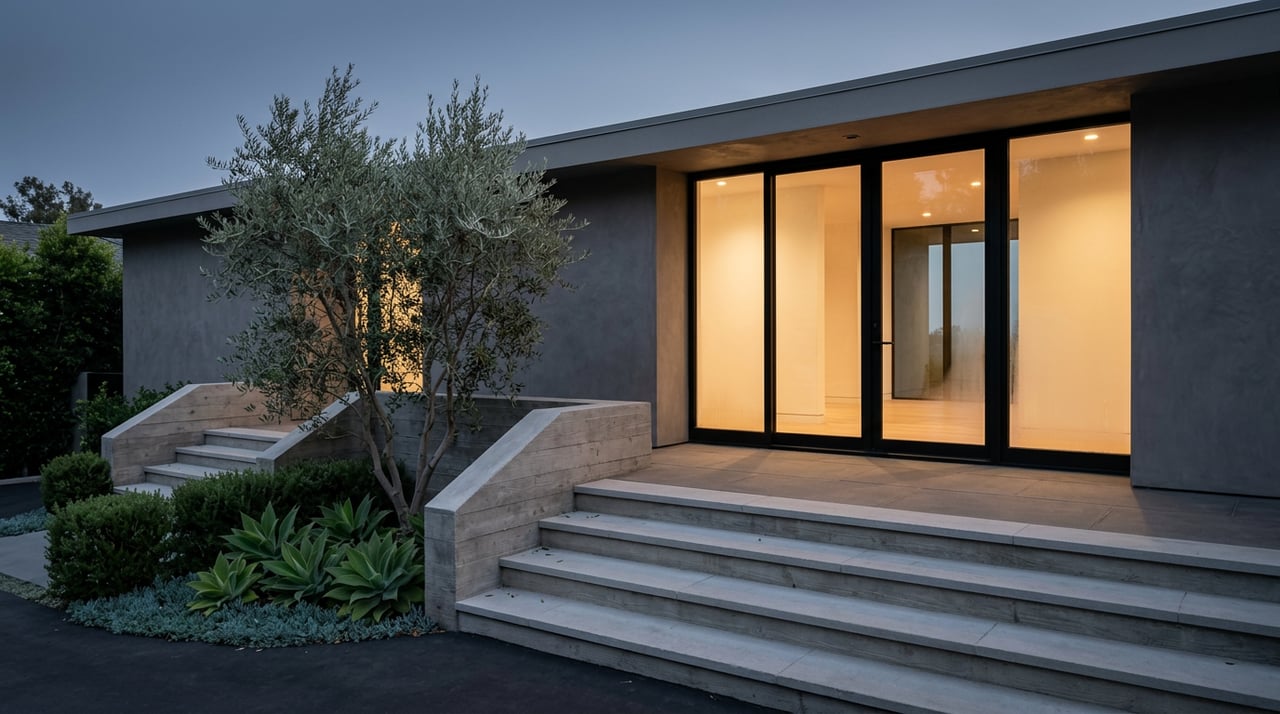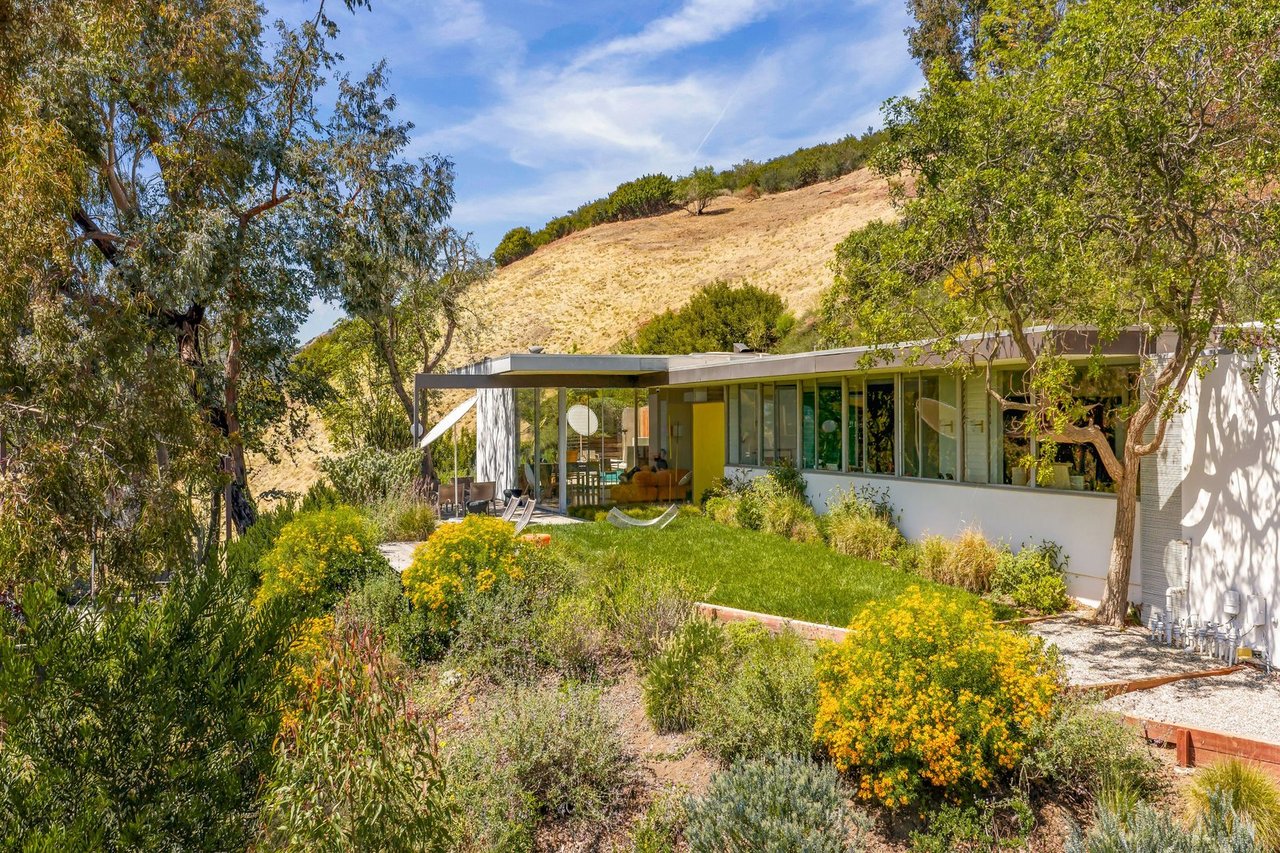
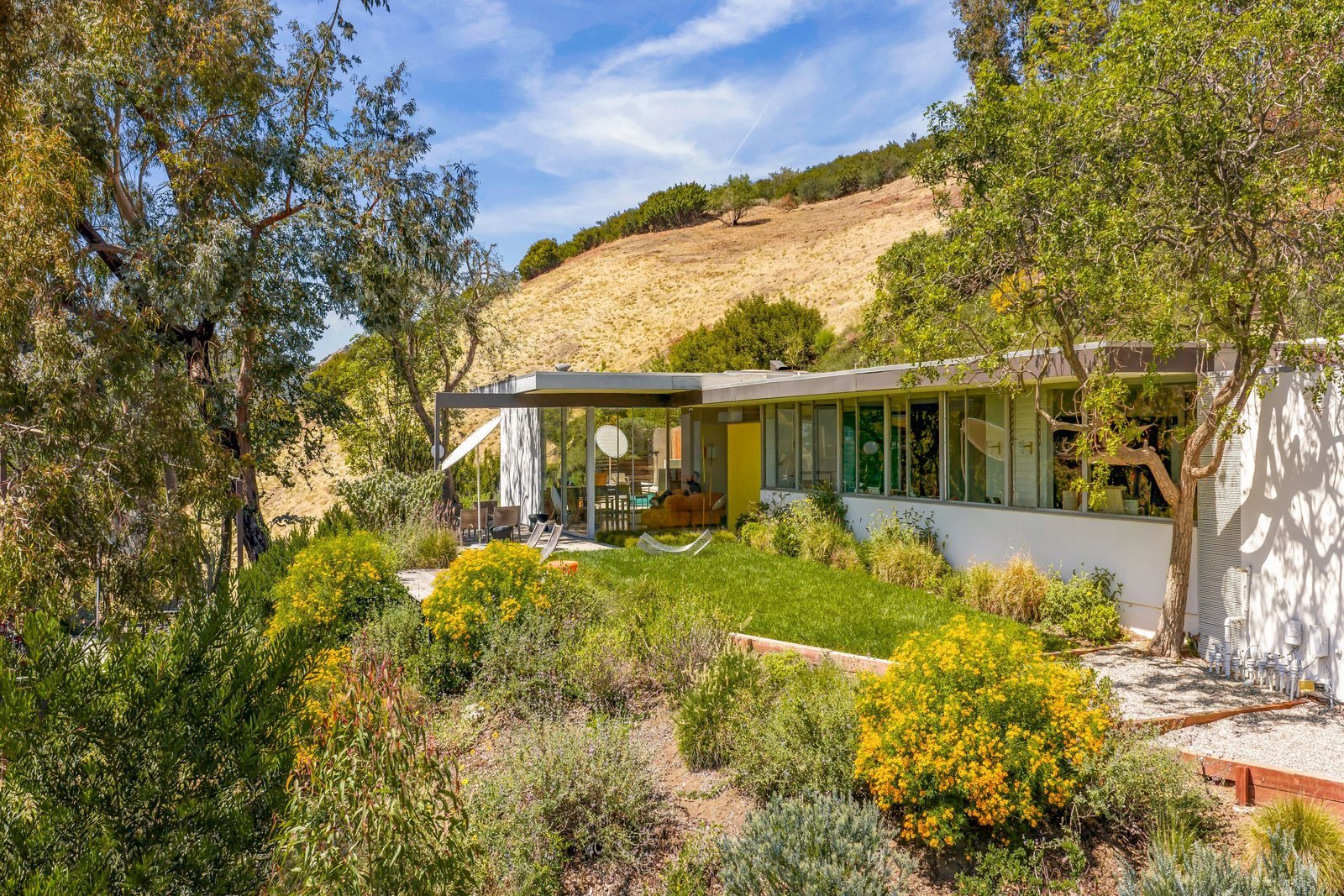
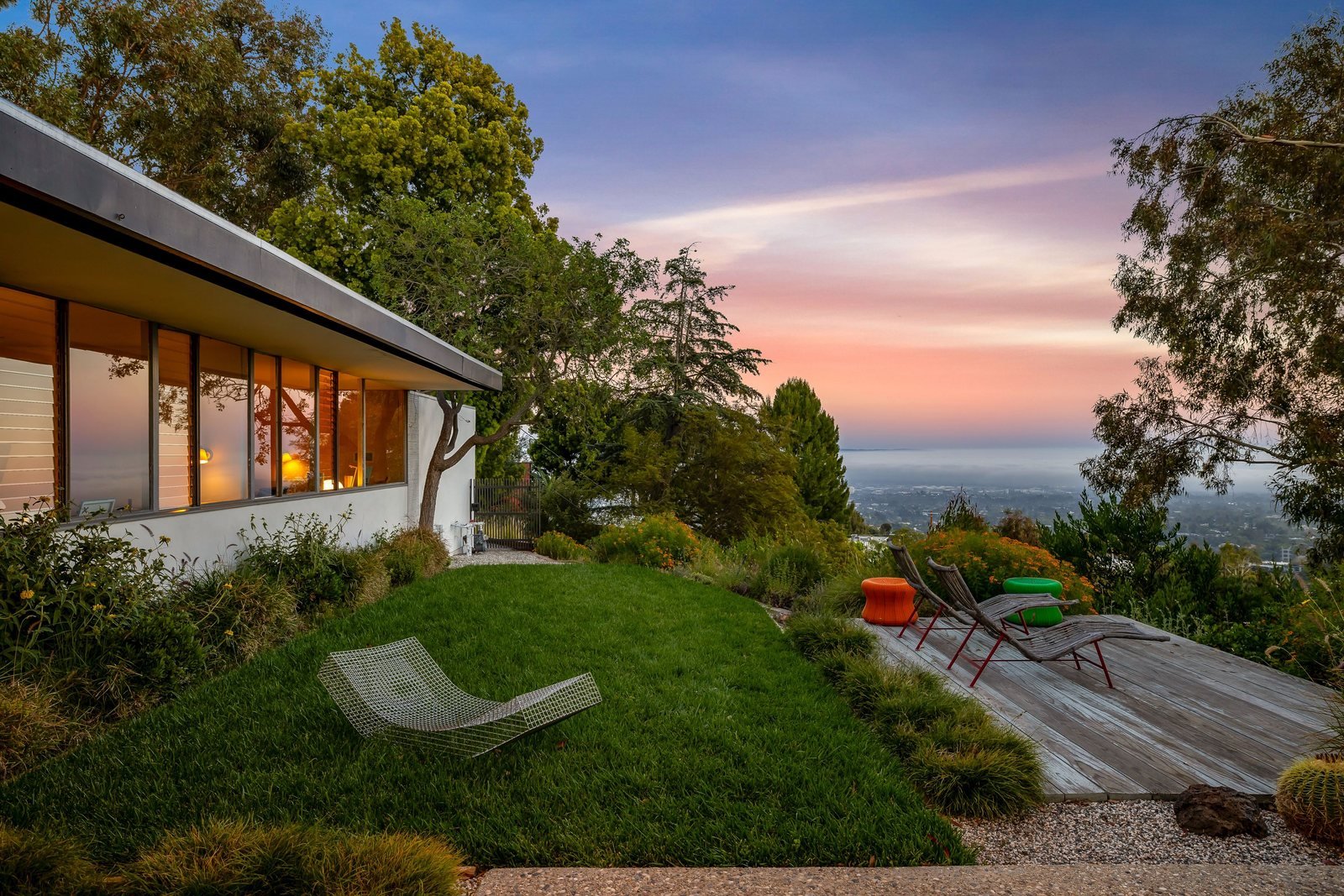
Every so often a house comes up that is less a transaction than a custody transfer. The Sale House, Richard Neutra's 1960 residence at the top of Brentwood's Tigertail Road, is one of those. It has just been listed at $4.75M according to the MLS at the time of this writing, and for anyone who follows Southern California modernism, the interesting part is not the number. It is how much of the original house is still there.
Which is a good excuse to talk about Neutra himself, because his name gets attached to a great deal of property in this state, and not always accurately.
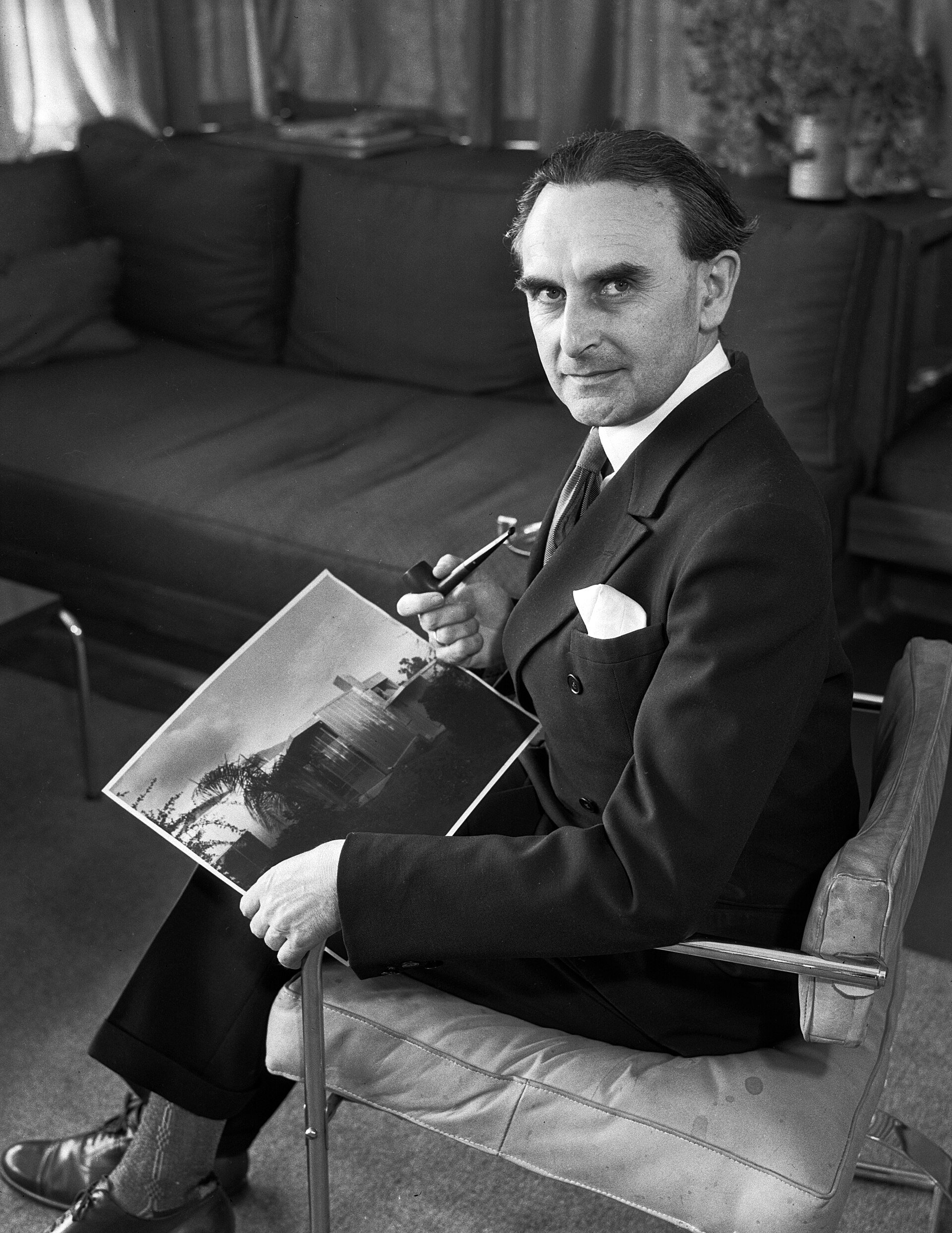
The Viennese architect who taught California how to live outdoors
Richard Neutra was born in Vienna in 1892 and trained in the most argumentative architectural culture in Europe. He studied under Adolf Loos, the man who wrote Ornament and Crime and meant it, and later worked in Berlin with Erich Mendelsohn. He arrived in the United States in the early 1920s and did a stint at Taliesin with Frank Lloyd Wright, who reportedly hired him at Louis Sullivan's funeral.
In 1925 he came to Los Angeles at the invitation of his friend and fellow Viennese Rudolph Schindler, and lived with Schindler and his wife Pauline at the Kings Road House in West Hollywood. Two Austrians in a concrete-and-canvas experiment on a Hollywood side street, working out what modern architecture might mean in a climate where you can leave the doors open all year. Nearly everything people now call California modernism traces back through that house.
The house that made his name
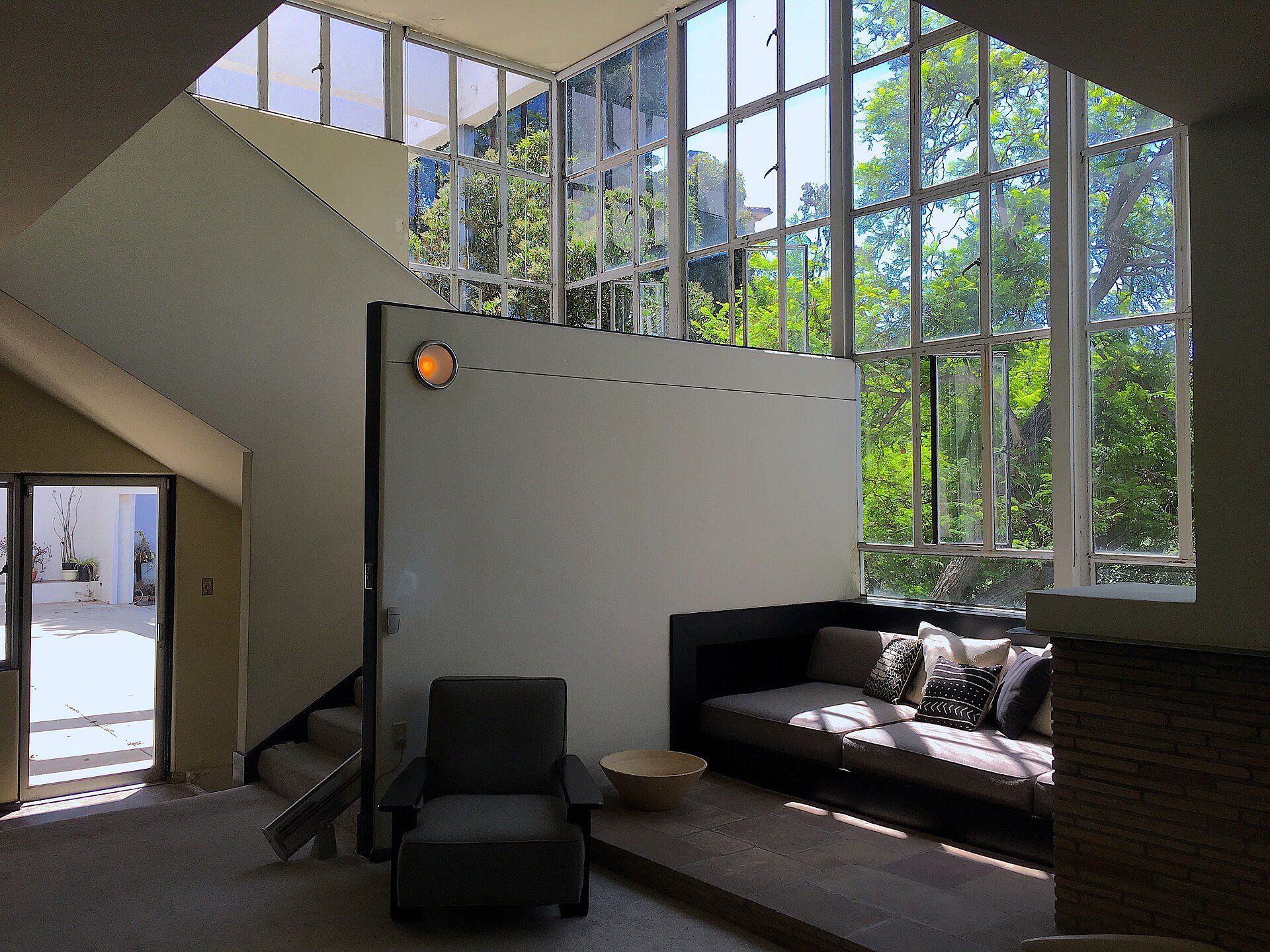
The Lovell Health House, finished in Los Feliz in 1929, was the first fully steel-framed residence built in the United States. Neutra hung a house off a steel skeleton on a hillside that had no business supporting one, wrapped it in glass, and delivered it for a client who believed architecture could make people physically healthier.
It worked, and it made him. Three years later he built the VDL Research House for himself in Silver Lake, deliberately as a demonstration that the same ideas could work at an ordinary budget. It is a National Historic Landmark now. By 1949 he was on the cover of Time.
Biorealism, which is the part most people skip
Neutra had an actual theory, and he wrote it down. His 1954 book Survival Through Design argued that badly designed buildings are not merely unattractive but genuinely harmful to the people inside them over time, and that architecture should be judged by what it does to the human nervous system. He called the approach biorealism.
Light, air, sightlines to living landscape and a building sited so it works with the ground rather than against it. Not stylistic preferences. Health requirements.
That book predates the mainstream environmental movement by two decades. It also explains why a Neutra house does what it does: the glass is not there to look impressive, it is there so you can see a tree from where you sit.
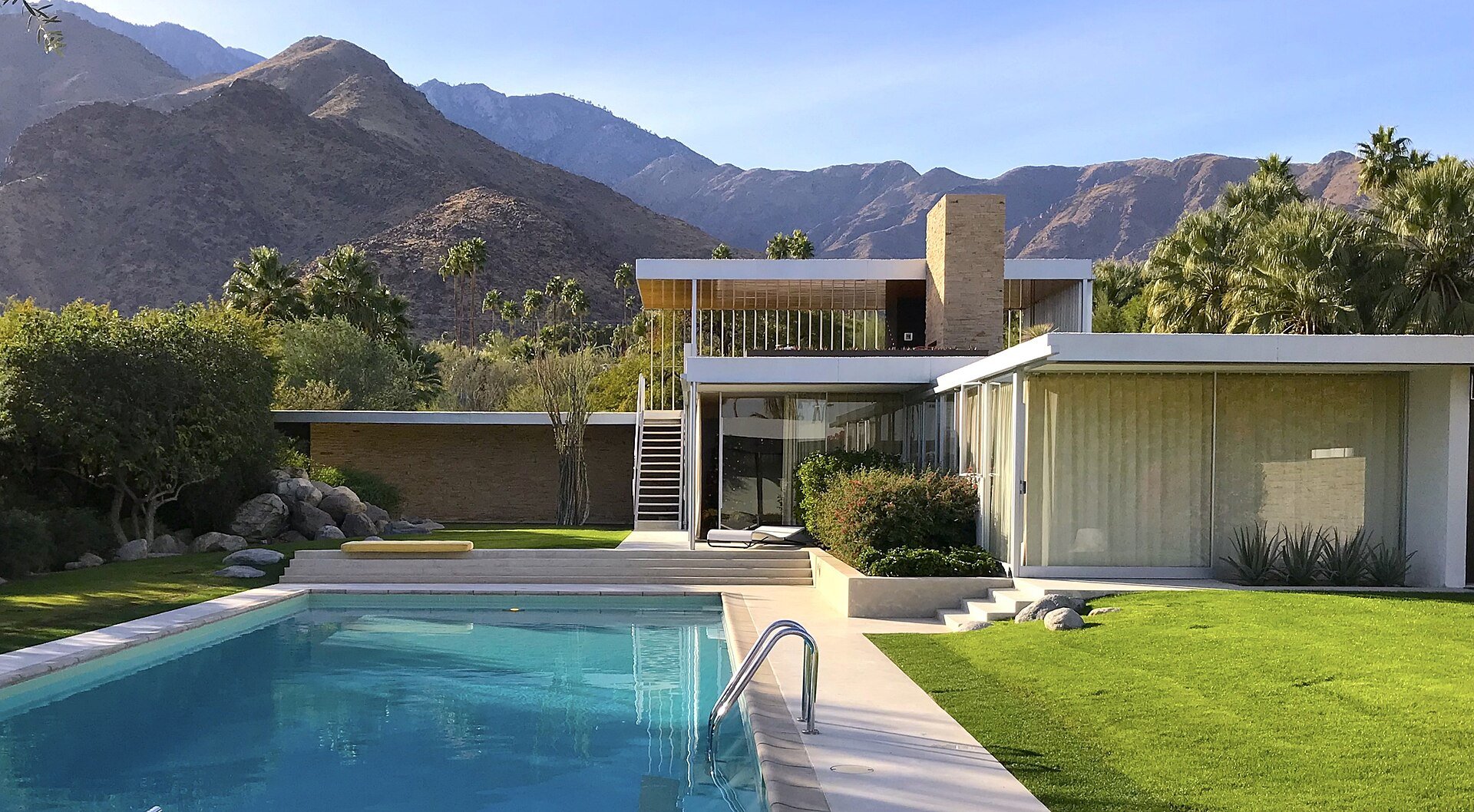
The Kaufmann Desert House in Palm Springs, completed in 1946, is the most photographed expression of it. Low horizontal planes, glass that disappears, the desert allowed to come right up to the building. That is the image most people carry of midcentury California, and it is Neutra's.
Where the Sale House fits
The listing
- Address: 1531 North Tigertail Road, Los Angeles
- Price: $4.75M according to the MLS at the time of this writing
- Architect: Richard Neutra
- Built: 1960
- Restoration: Escher GuneWardena and GW Design, 2021
- Size: 1,632 sq ft, 3 bed, 2 bath
- Lot: 1.02 acres
- Listed by: Ernie Carswell and Spencer Daly, Sotheby's International Realty
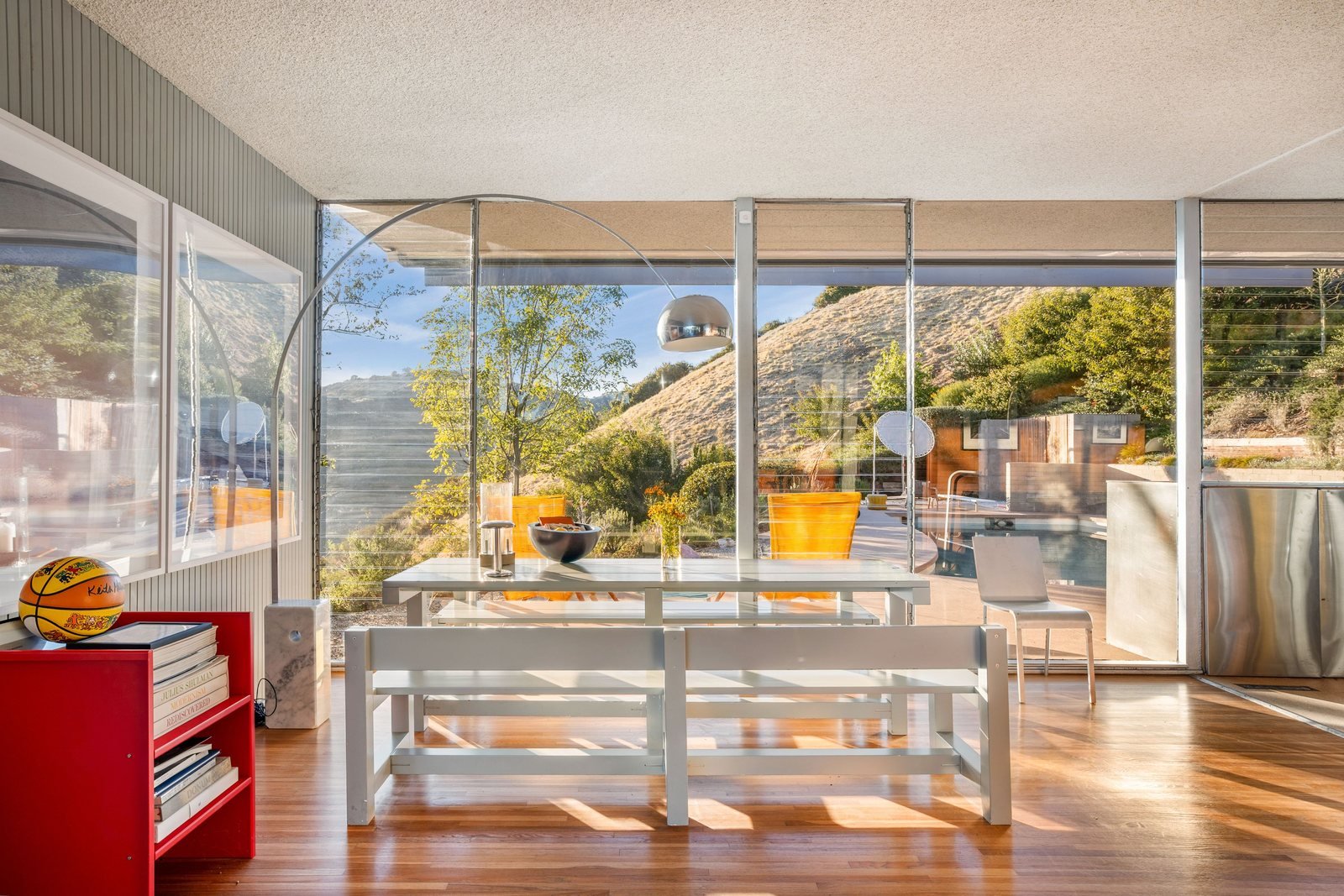
Neutra designed the house for the artist Elsa Sale and her husband Robert, and the brief shaped it. This was a home built to hold and display art, solved the way Neutra solved most things: with light. Skylights placed to wash specific walls. Lighting designed into the structure rather than added to it.
At 1,632 square feet on just over an acre, it is a small building on a large piece of ground, and that ratio is the whole philosophy in one number. The house does not dominate the site. It takes the least it can and gives the rest back. The views run across the canyons to the skyline, the Pacific, Catalina and Palos Verdes.
The restoration is the part that matters
Plenty of midcentury houses reach the market described as restored. Usually that means someone replaced the kitchen and repainted. This one is different, and the difference is the reason to write about it.
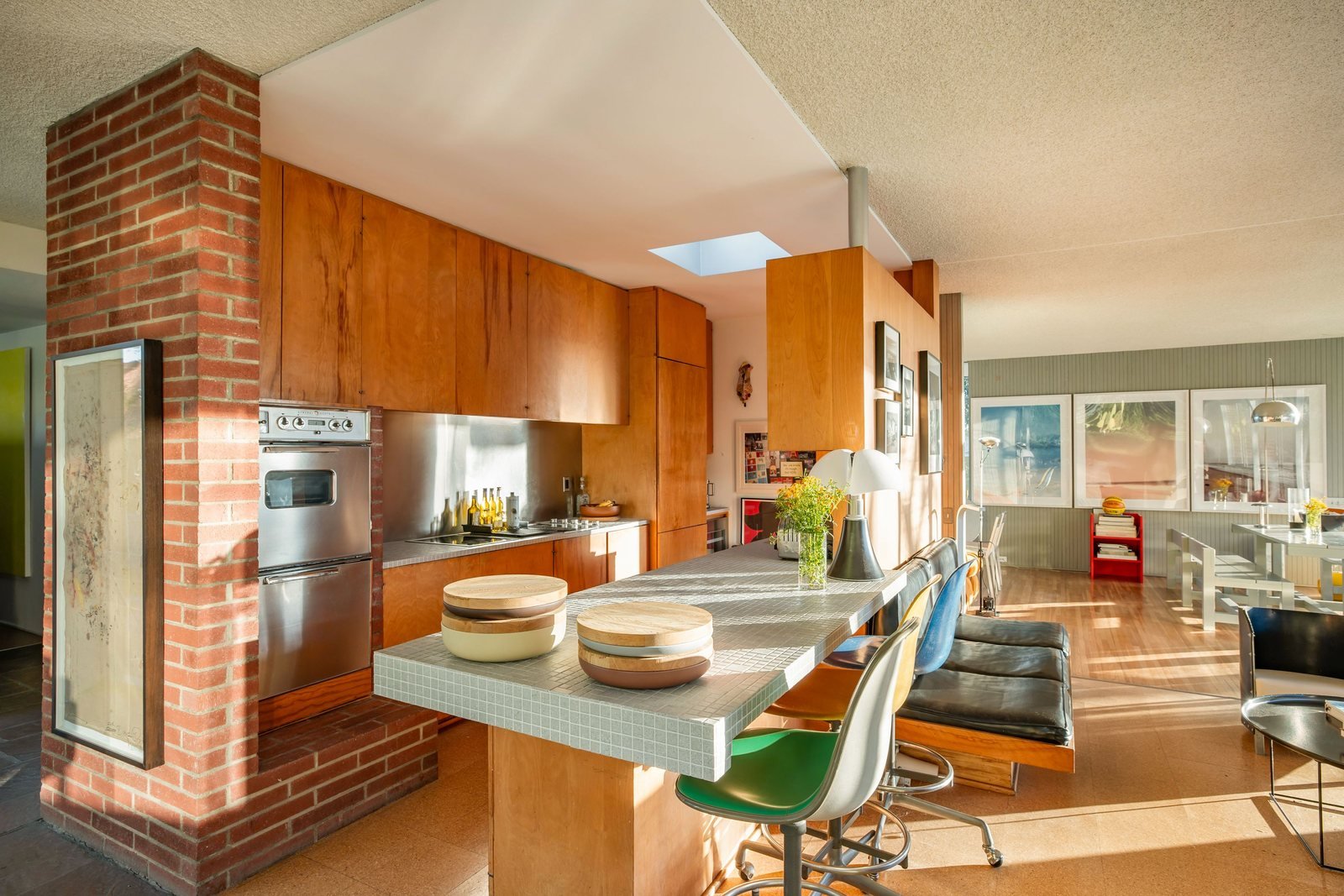
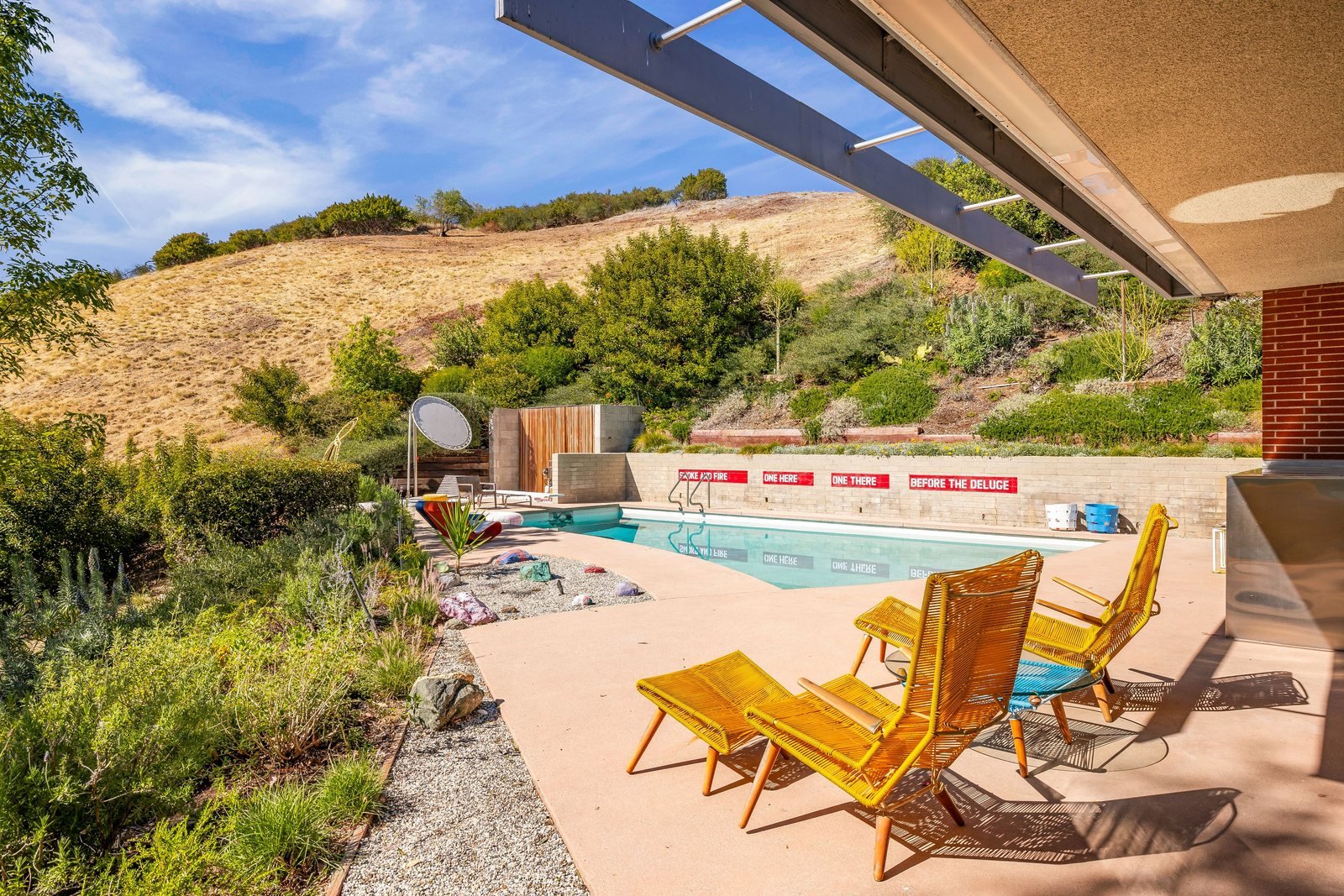
Escher GuneWardena and GW Design handled the 2021 work. Escher GuneWardena are not generalists; they are who the Los Angeles preservation world calls when a significant modern house needs work without being flattened into contemporary spec. What survived is the list that actually matters at this level: the original built-in furnishings, the original cabinetry, Elsa Sale's mosaic work, and the original pool with its original diving board. Modern systems were fitted around those things rather than through them.
That is a hard discipline. The easy money in a house like this is to gut it, open the kitchen and sell square footage. Someone chose not to.
Crestwood Hills, and why the neighborhood is part of the asset
The house sits inside Crestwood Hills, which is not incidental. Crestwood Hills began in the late 1940s as a cooperative: a group of musicians and professionals who pooled resources to build modern housing they could actually afford, with architecture by A. Quincy Jones, Whitney Smith and Edgardo Contini. It remains one of the most coherent concentrations of midcentury modern housing anywhere in Los Angeles.
Buying there means buying into a street where the architecture is the point and the neighbors know what they have. That protects value in a way a comparable house on an ordinary block does not get.
What this signals for Orange County owners
Three things are worth carrying south from this listing.
Provenance is doing more pricing work than it used to. At 1,632 square feet, this house is priced far beyond what its size alone would support in Brentwood. The premium attaches to the architect, the intactness and the quality of the restoration. Buyers at this level are paying for authorship.
The restoration credential is becoming part of the asset. Ten years ago "restored" was a word in a listing. Increasingly it is a question of by whom. A restoration by a firm with a preservation record reads as verification. An unnamed contractor reads as risk, and gets discounted for it.
Original detail is appreciating faster than upgrades. The mosaic, the built-ins, the original diving board are what is being marketed here. Not a new primary suite. That is a real inversion from how these houses sold in the 2000s, when original material was treated as something to overcome.
The Orange County read. We see the same pattern in the post and beam stock in Mesa Verde and the coastal modern houses in Laguna and Corona del Mar. The ones that kept their clerestory glazing, their exposed beams, their terrazzo and their original tile are outperforming the ones comprehensively modernized in the last cycle. The instinct to renovate everything is expensive twice: once when you pay for it, and again when you sell.
If you own one of these
You do not need a Neutra to benefit from how a Neutra is valued. Keep the drawings if you have them. Photograph original details before any work begins. Use trades who have handled midcentury houses before and know what a clerestory detail is for. Document who did what, and when.
When it comes time to list, that history is not sentiment. It is evidence, and evidence is what supports the number.
Sources and credits
The Sale House is listed at $4.75M according to the MLS at the time of this writing, by Ernie Carswell and Spencer Daly of Sotheby's International Realty, Beverly Hills Brokerage.
Photographs of the Sale House are courtesy of Sotheby's International Realty - Beverly Hills Brokerage.
Listing details were originally published by Dwell, in an article written by Grace Bernard, presented by Sotheby's International Realty. Read the original article and see the full gallery at Dwell.
Photographs of Richard Neutra, the Lovell Health House and the Kaufmann Desert House are used under Creative Commons licence and credited individually above.