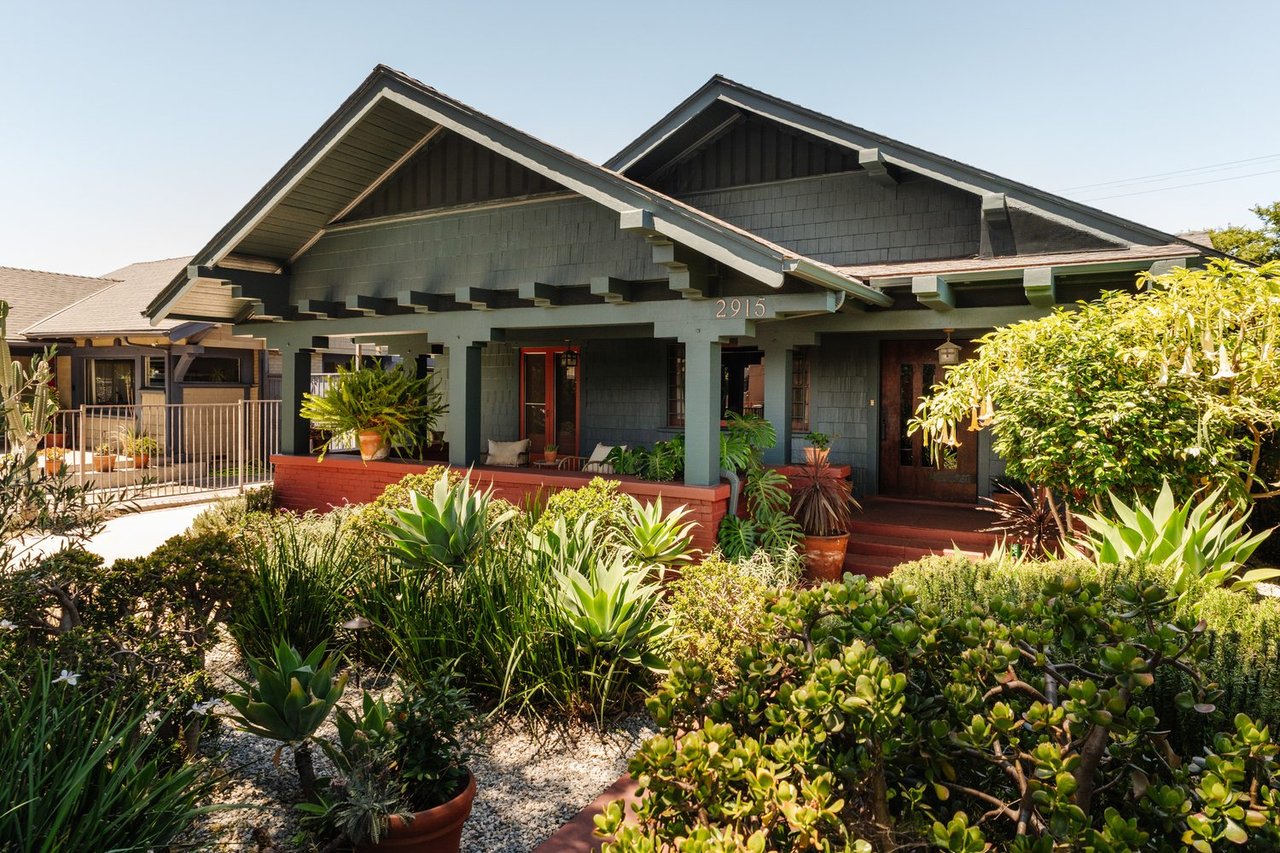
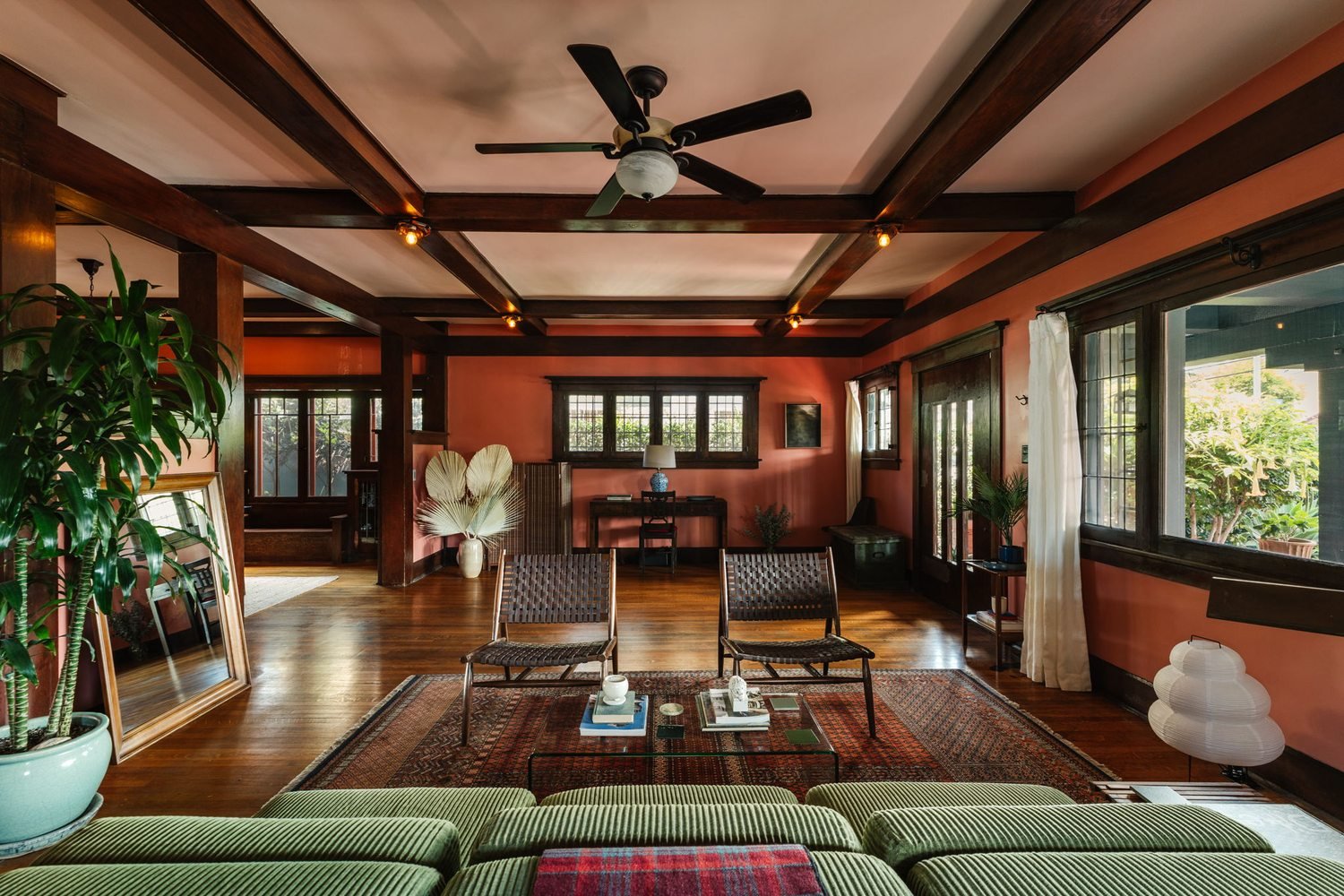
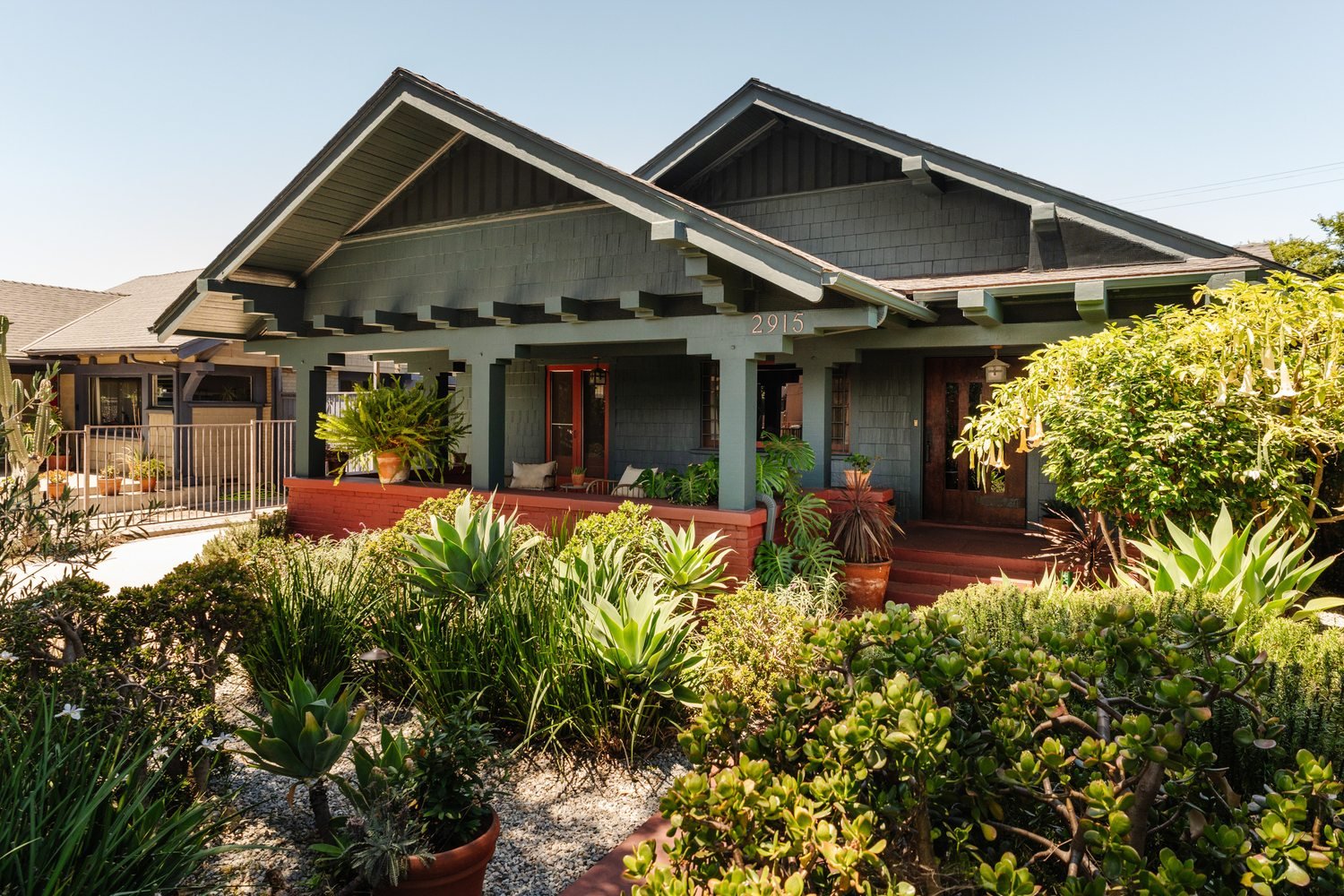
Most of what we cover here starts around 1945, when the postwar building boom and a generation of émigré architects reshaped how Southern California builds houses. The A.C. Tobias Residence predates all of it. Built in 1908 as the personal home of developer Archibald Clark Tobias, it is a designated Los Angeles Historic-Cultural Monument, and it is currently listed at $1.2M.
It is worth a look for a reason beyond the listing: this is the architecture that midcentury modernism was reacting against, and reacting to. You cannot fully understand what Neutra and Eichler were doing differently without knowing what a serious, well-built house looked like the generation before them.
The listing
- Address: 2915 S Budlong Ave, Los Angeles
- Price: $1,199,000
- Architects: George J. Webster and Neal Dow Barker
- Built: 1908
- Size: 2,237 sq ft, 2 bed, 2 bath
- Status: Los Angeles Historic-Cultural Monument
- Listed by: Jose Prats, Character Homes
What Arts and Crafts was arguing for
The Craftsman movement, of which this house is a genuine, well-preserved example, was itself a reaction: against Victorian ornamentation, against machine-made mass production, and in favor of visible, honest craftsmanship. Thick wood posts and beams left exposed rather than hidden behind plaster. Built-in cabinetry rather than furniture bought separately. Materials that showed how they were made.
That is not a different value system from the one Neutra or Schindler would build on decades later. It is an earlier chapter of the same argument: that a house should be honest about its materials and its construction, rather than disguising them. Where midcentury modernism swapped in steel and glass for wood and stone, and traded ornament for light, it kept the underlying conviction that a well-built house does not need to pretend to be something else.
What survived 117 years
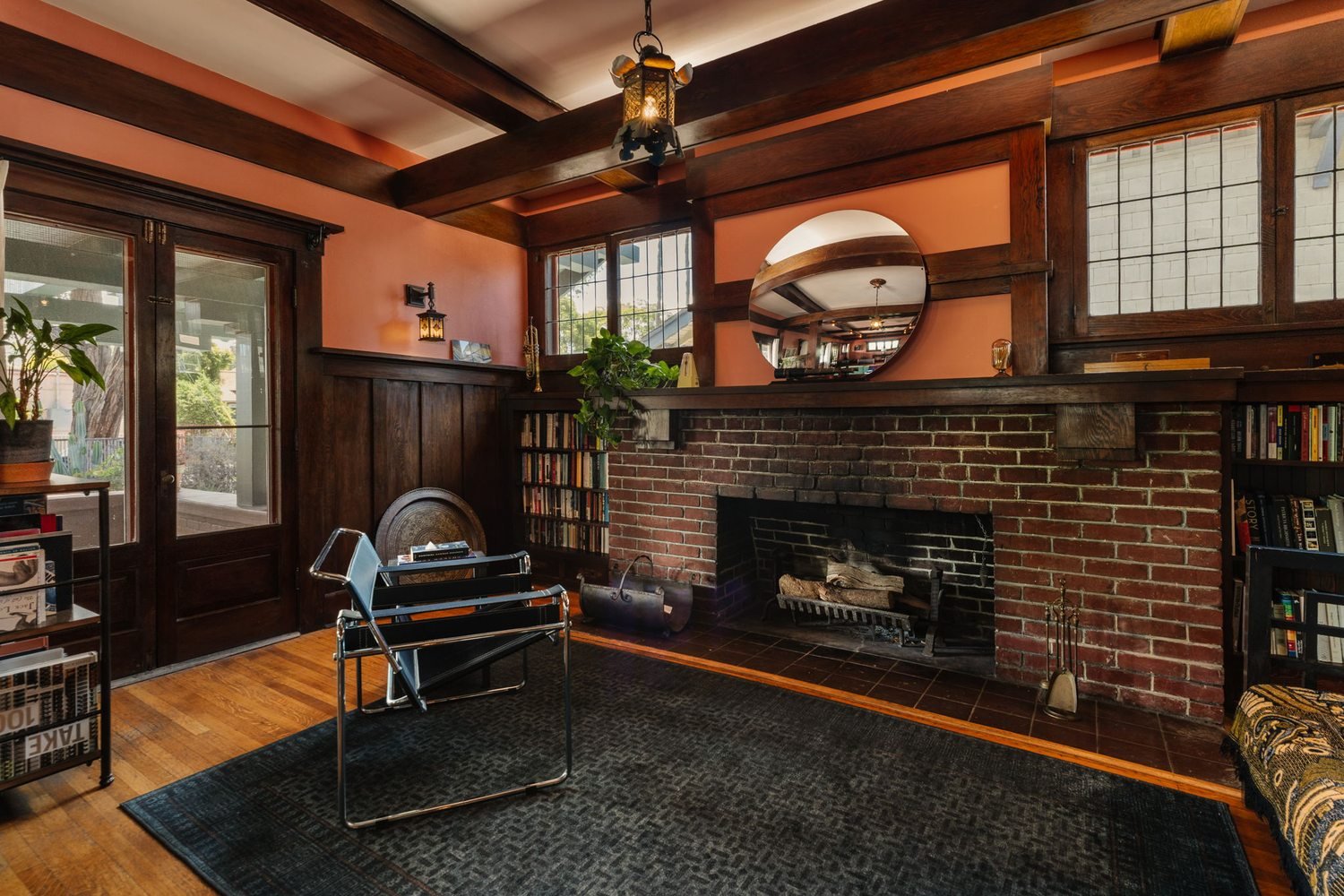
The current owners renovated with restraint, and the list of what stayed original is long: richly stained woodwork, leaded glass windows, box-beam ceilings, built-in cabinetry, and period lighting throughout. Built-in bookshelves flank the home's original brick fireplace. That is not a house that got a facelift. It is a house that got the maintenance it needed to keep functioning as designed.
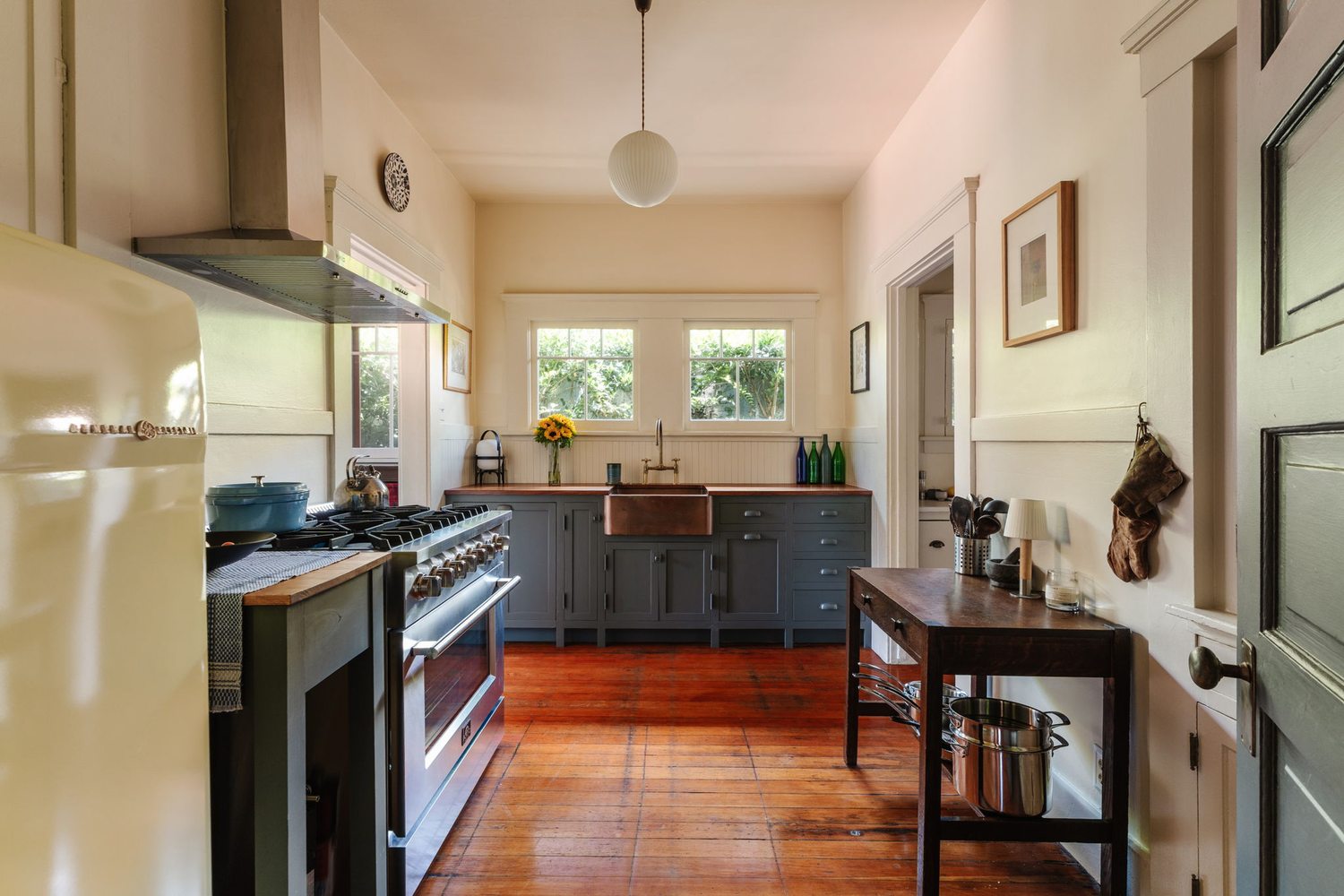
The one meaningfully new space is the kitchen, and it is worth noting how it was done: custom millwork cabinetry, African mahogany counters, a copper sink, unlacquered brass fixtures, and a restored vintage refrigerator. Nothing in that list reads as contemporary in a way that would clash with the rest of the house. It reads as a kitchen this house might plausibly have had, updated for how people actually cook now.
The lesson for a midcentury renovation
This is the same restraint we look for when a client is renovating a significant post-and-beam or midcentury property, just applied to a different material palette. The instinct in any historic renovation is usually to touch too much. What makes a renovation like this one, or a well-handled Eichler or Neutra restoration, actually work is knowing which systems genuinely need updating (kitchens, baths, mechanicals) and leaving everything else, the parts that define the house's character, alone.
Why this belongs in a bouHAUS conversation. A designated Historic-Cultural Monument carries real constraints, and real advantages, that most buyers of architecturally significant homes eventually need to understand: Mills Act tax benefits, review requirements for exterior changes, and a documented history that supports value in exactly the way we discussed with the Neutra Sale House. Whether the house is 1908 or 1962, the mechanics of buying and owning a landmark are similar, and worth knowing before a client falls in love with one.
Sources and credits
The A.C. Tobias Residence is listed at $1,199,000 by Jose Prats of Character Homes. Photographs courtesy of Character Homes.
Listing details originally published by Dwell, in "For $1.2M, You Can Score a Landmark Craftsman Home in Los Angeles," written by Grace Bernard. Read the original article and see all 14 photographs at Dwell.