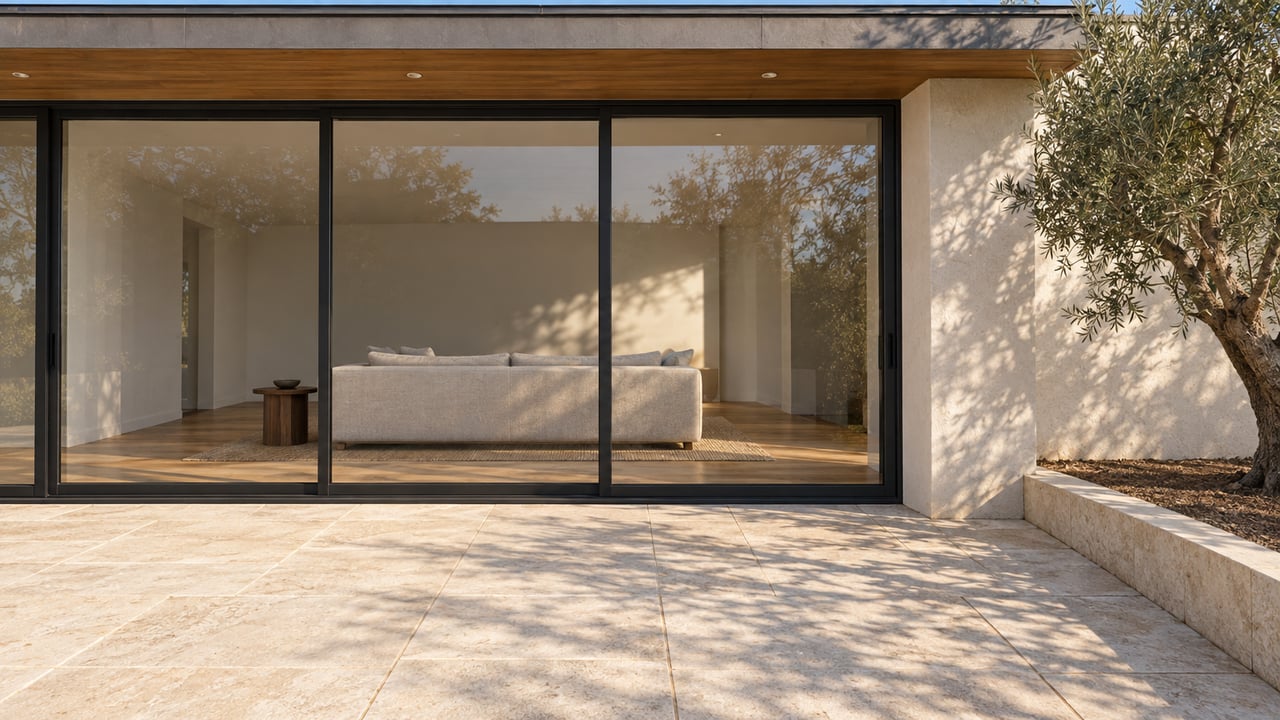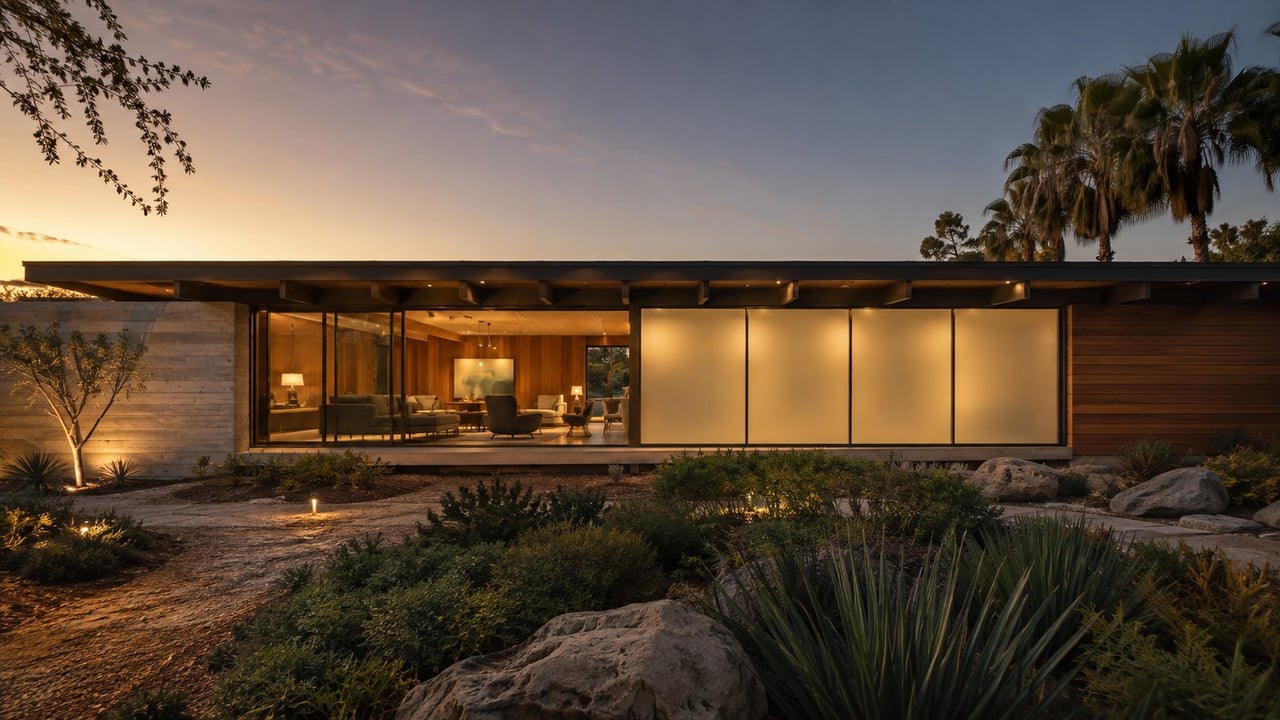
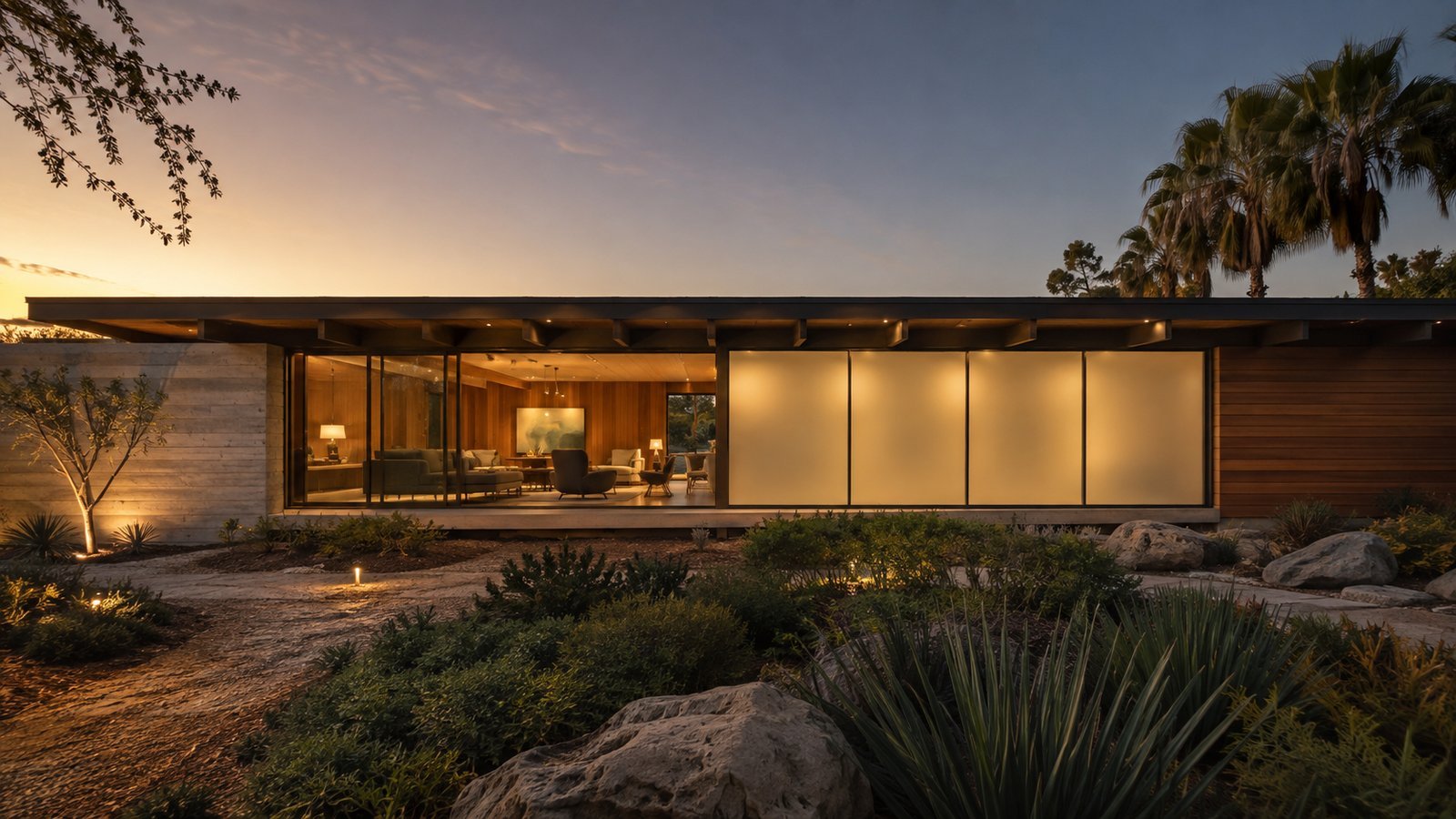
If you have ever toured a house with a genuinely great wall of glass, you have probably had the same thought twice. During the day: this is the whole point. After sunset, with the lights on and the shades still not installed: everyone on the street can watch you make dinner.
That tension is old. Neutra ran into it, Eichler ran into it, and every architect since who has taken indoor-outdoor seriously has had to solve it with roof overhangs, landscaping, or a compromise nobody loves: heavy drapery hung in front of glass someone paid a great deal of money for.
What smart glass actually does
A handful of companies are now selling glass that switches between clear and private on demand, using liquid crystal technology laminated directly into the pane. Cardinal Glass Industries' CLiC is one of the more developed versions, more than a decade in R&D, and it is worth understanding regardless of which brand ends up in a given house, because the underlying idea is going to show up across the category.
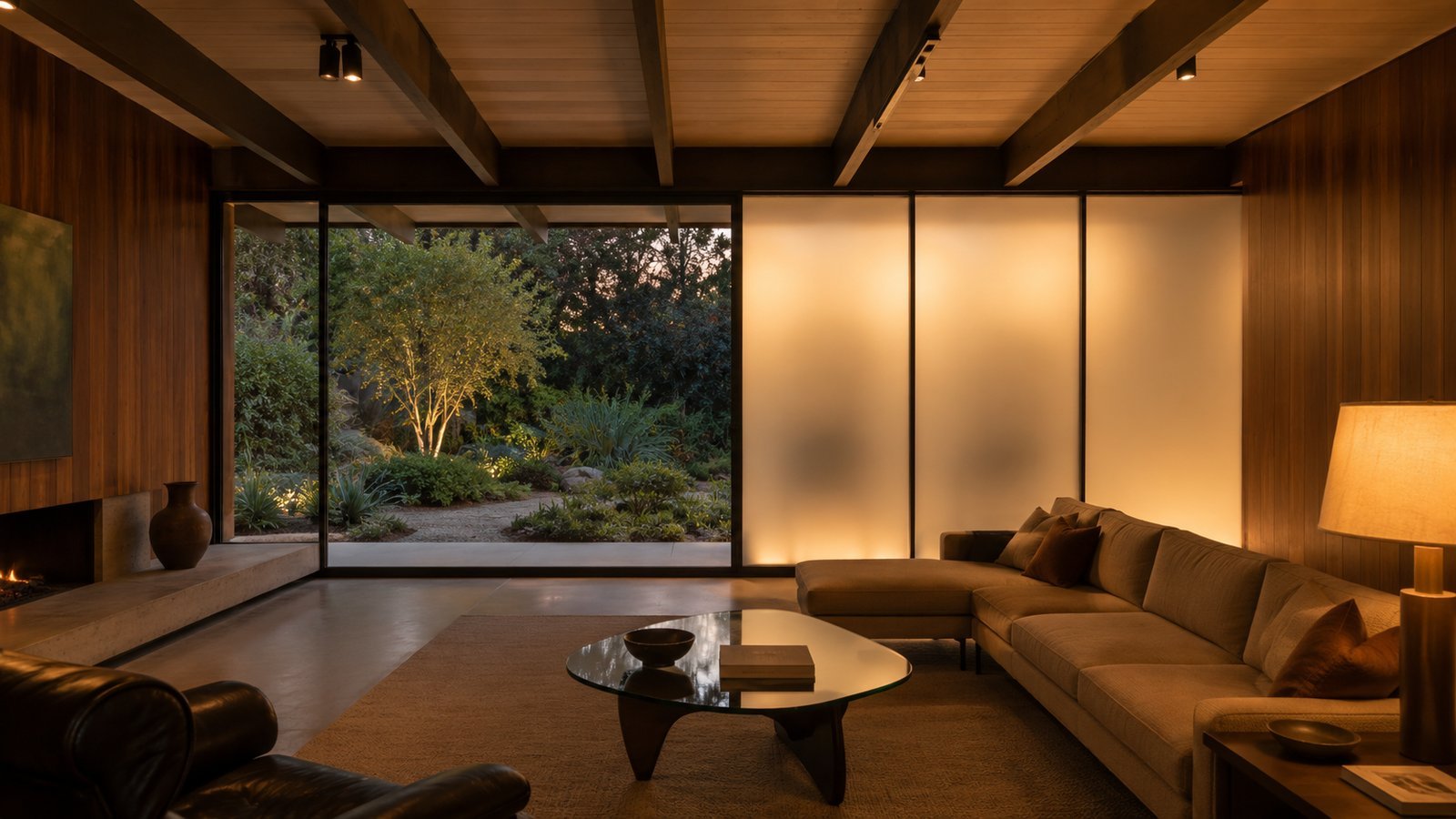
In clear mode, the glass behaves like ordinary high-end architectural glazing: no haze, no tint, full view. Flip it to private mode and the crystals reorient, scattering the light path so the room can't be seen into, while daylight continues to pass through as a soft, diffused glow rather than going dark. The switch happens in milliseconds, by wall switch or through a home automation system.
Many privacy solutions ask you to choose. Do you want daylight, or do you want privacy? With this kind of glass, you control your environment to meet your immediate need.
Why this matters more in a Neutra or Eichler than in a typical house
Biophilic design, the umbrella term for architecture that keeps people connected to natural light and the outdoors, is not a new idea in coastal Orange County. It is the operating principle of most of the post-and-beam and midcentury stock we deal in. Large glazing is not a feature added to these houses. It is the house.
Which means the old workaround, heavy window coverings, does more damage here than it would in a conventional home. Drapery across a wall of glass in a post-and-beam great room does not just block a view. It contradicts the entire design intent of the structure. Owners of these houses have effectively been asked to choose between the architecture and their privacy every evening for sixty years.
What changes with switchable glass. A retrofit or new installation lets a glass wall stay glass around the clock. Clear by day for the connection to the landscape the house was built for. Private by night without curtains, blinds, or films that read as an add-on to the original design.
Where this is likely to matter first
Three situations come up repeatedly in coastal OC architectural homes, and this technology addresses all three.
Street-facing glazing on a shallow lot. Several of the classic post-and-beam tracts in Mesa Verde and the coastal canyons put a major glass wall close to the street, because the lots are narrow and the architecture wanted light from every direction. Switchable glass solves the exposure problem without an exterior fence, a hedge, or a redesign.
A primary bedroom that opens onto a shared property line. Common in Corona del Mar's tighter lots. The room can stay fully glazed and still be private without a fixed film that also blocks the daytime view.
A renovation that wants to restore original glazing a previous owner covered over. We see this often: a midcentury house where a prior owner walled in or draped a window wall for privacy, erasing part of what made the house significant. Switchable glass is one of the few interventions that can restore the original architecture and solve the reason it was covered in the first place.
The practical version
This is not inexpensive, and it is not yet the default choice. But the trajectory is the one to watch: architectural glass that behaves like architecture instead of like a compromise. For an owner restoring a significant midcentury property, or a buyer weighing whether a glass-heavy house will actually work for daily life, it is worth knowing this option exists before defaulting to drapery, film, or a redesign that trades away the thing that made the house worth buying in the first place.
Sources and credits
Reporting on CLiC smart glass technology and the quotation from Peter Whaley, technical sales and marketing manager at Cardinal Glass Industries, originally published by Dwell, written by Nikhita Mahtani, presented by CLiC. Read the original article at Dwell.