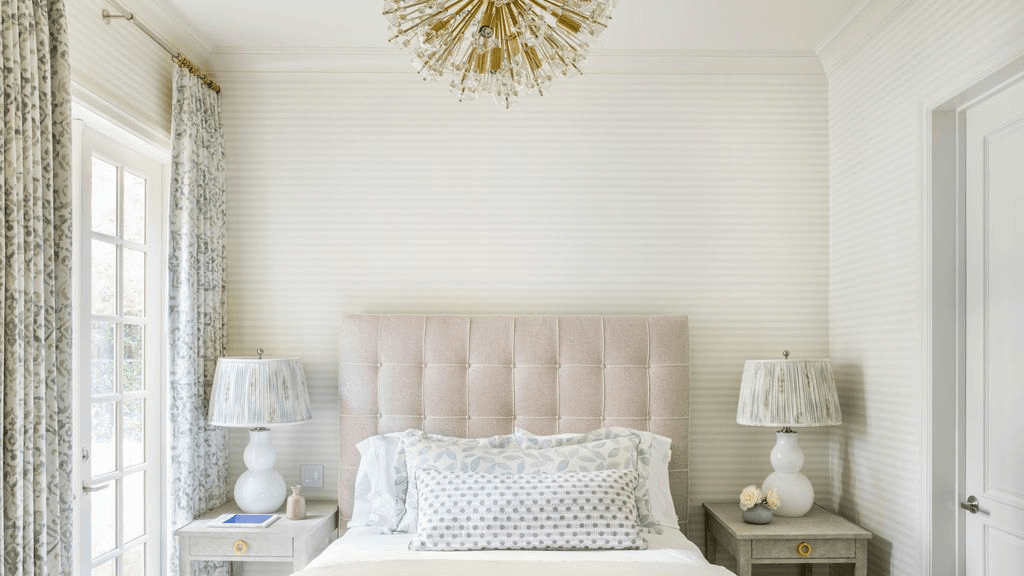
Everyone covets a spacious bedroom, but that doesn’t mean a small bedroom has to feel crammed. It’s all a matter of perspective—and design savviness—to create an illusion of a larger, more open bedroom. So we turned to design experts for their advice on growing your space, visually speaking.
“A thoughtfully edited furniture layout with minimal pieces is the easiest way to make a smaller bedroom feel instantly larger,” says Jennifer Jones, principal designer of Niche Interiors in San Francisco. “Pay close attention to the scale of pieces to ensure that none of the furniture items feel too large for the space.”
While the color palette can vary, interior designers agree that a lighter base and a monochromatic palette tends to feel more expansive than dark moody schemes. “In rooms with sloped or peaked ceilings, use a single color across all surfaces,” says designer Natasha Willauer who recently worked on the expansion of Greydon House, a boutique hotel in Nantucket, Massachusetts. “This minimizes visual breaks between walls and ceiling, softening edges and making the space feel larger—an approach that works equally well with paint or wall coverings.”
Layering in shades of blue, hues inspired by the sky and the sea, is another trick to bring in balance that feels expansive. Jones suggests using similar tones in the rugs, bedding, and other upholstery, such as a storage bench, for harmonious design.
For Toronto designer Dvira Ovadia, transforming a small bedroom into something comfortable is all about restraint and intention. “Built-ins are key, they allow us to eliminate bulky, floating pieces and instead create a seamless, integrated envelope that reads as architecture rather than furniture,” Ovadia says. “The result is a space that feels calmer, more resolved, and inherently more open.”
Read on for more expert advice on how designers transform petite rooms into pretty gems—from a Lilly Pulitzer suite with wallpaper that makes you look up to a bedroom that uses pattern play as a small-space distraction to a mirror trick that can almost double the illusion of space.
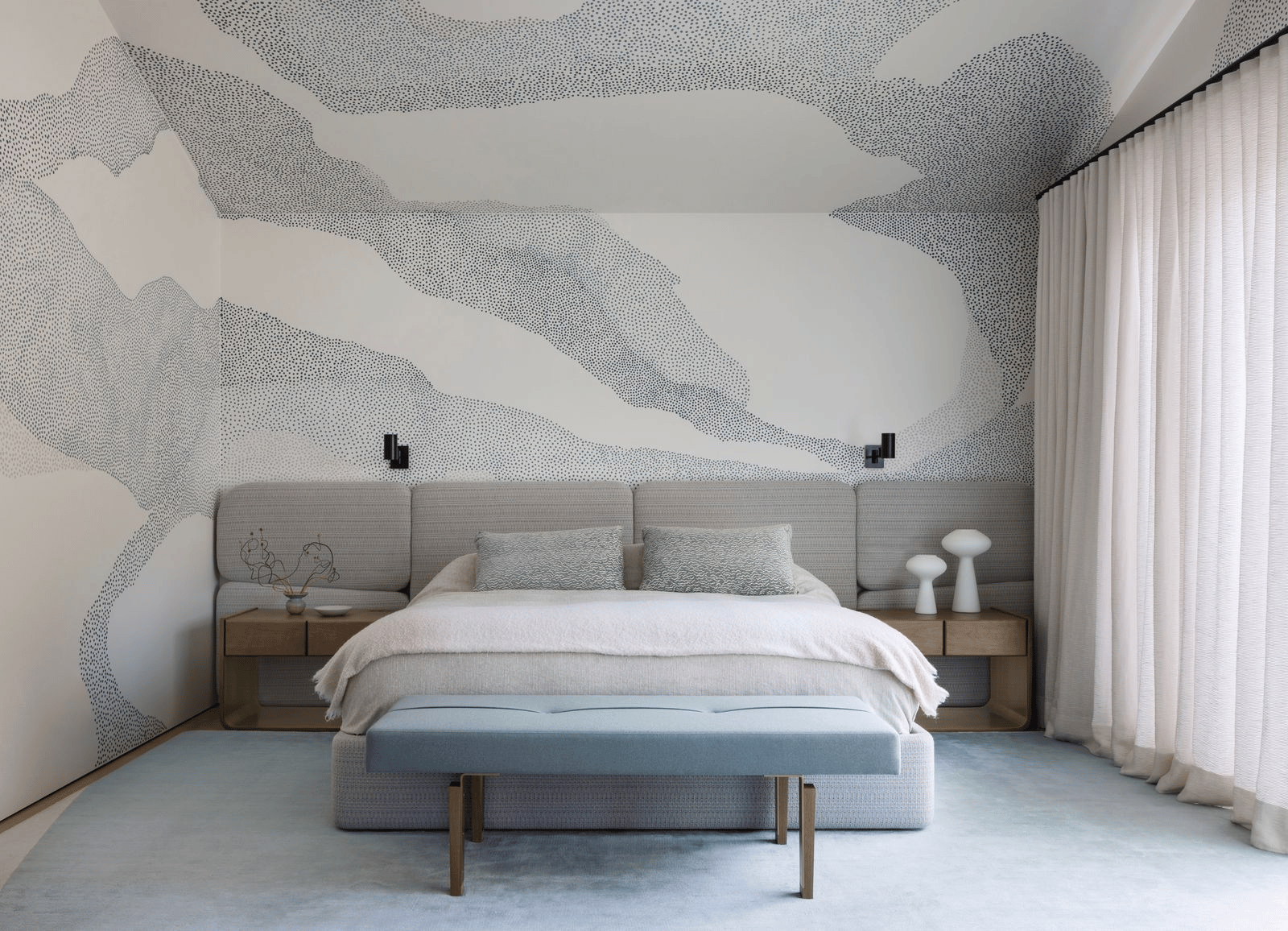
Pattern-drench the wall and ceiling
A room filled with natural light is a good start, but you can make any room feel spacious by using delicate paint colors. What you want to keep in mind is the transition between walls, ceilings, and trim. “A room with minimal contrast feels much more expansive since there are no stopping points for your eye to register between walls and ceilings,” Jones explains. For this reason, she worked with decorative artist Caroline Lizarraga to create a continuous hand-painted pattern for a seamless transition that still feels “dramatic.” The delicate stippled pattern is reminiscent of shifting clouds that add depth and movement while maintaining an airiness.
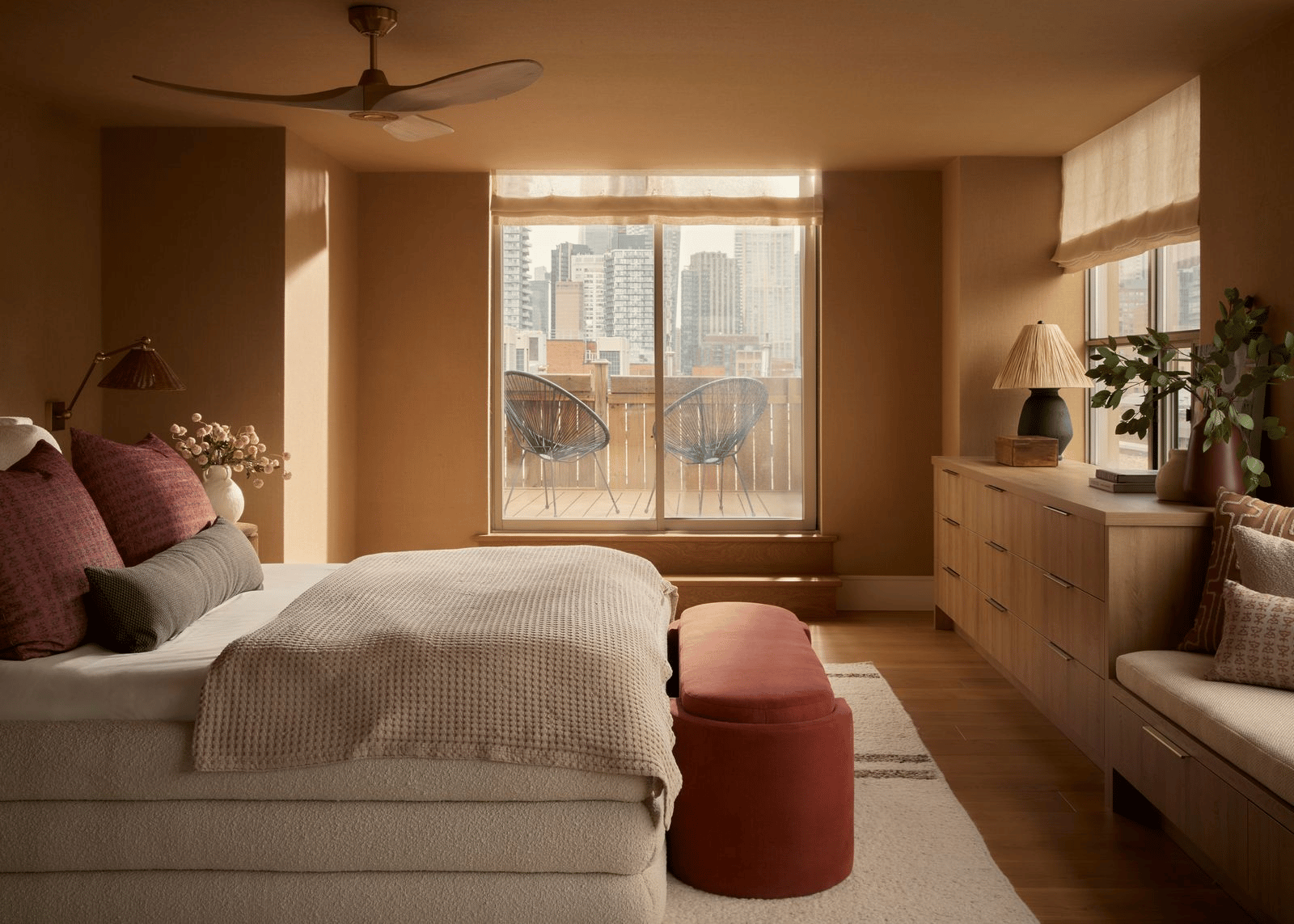
Blur boundaries with tonal interiors
“What makes this space feel so expansive is how quietly everything blends into one continuous envelope,” says Ovadia. “The millwork, the bed, even the textiles are all working within a very tight tonal range, so nothing visually ‘jumps out.’ Instead of reading each piece individually, your eye reads the room as a whole, which softens edges and stretches the perception of space.”
Selecting a clay-toned neutral for the wallpaper (which continues onto the ceiling) further bolsters the seamless effect that works to blur boundaries. The final touch is adding tonal furnishings consistent with the immersive effect of all the other design elements.
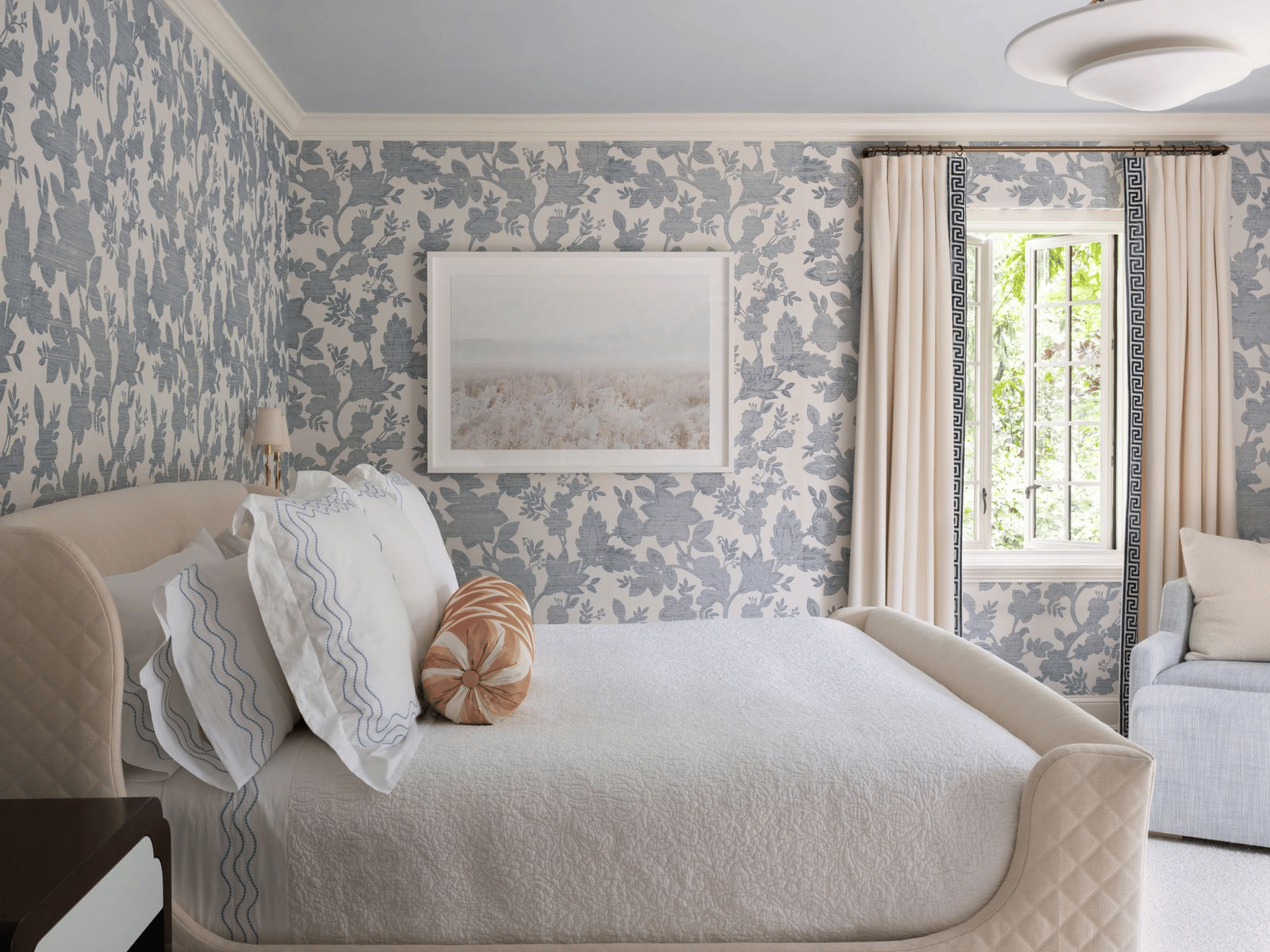
Bathe the room in blues
It’s not a coincidence that the blue sky makes you feel limitless. That’s one of the reasons designers tend to gravitate toward blue hues when they want to make a small room feel larger. Lillian Byers, designer and project manager at Jackson Platt in Brevard, North Carolina, used the meandering pattern of a grasscloth wall covering to give the space a “glowy” moment. “The ceiling color is pulled from a tone in the walls,” she points out. “Since the wallpaper is a bit graphic all the other furnishings were intentionally solid lighter-toned fabrics.”
Incorporate mirrors
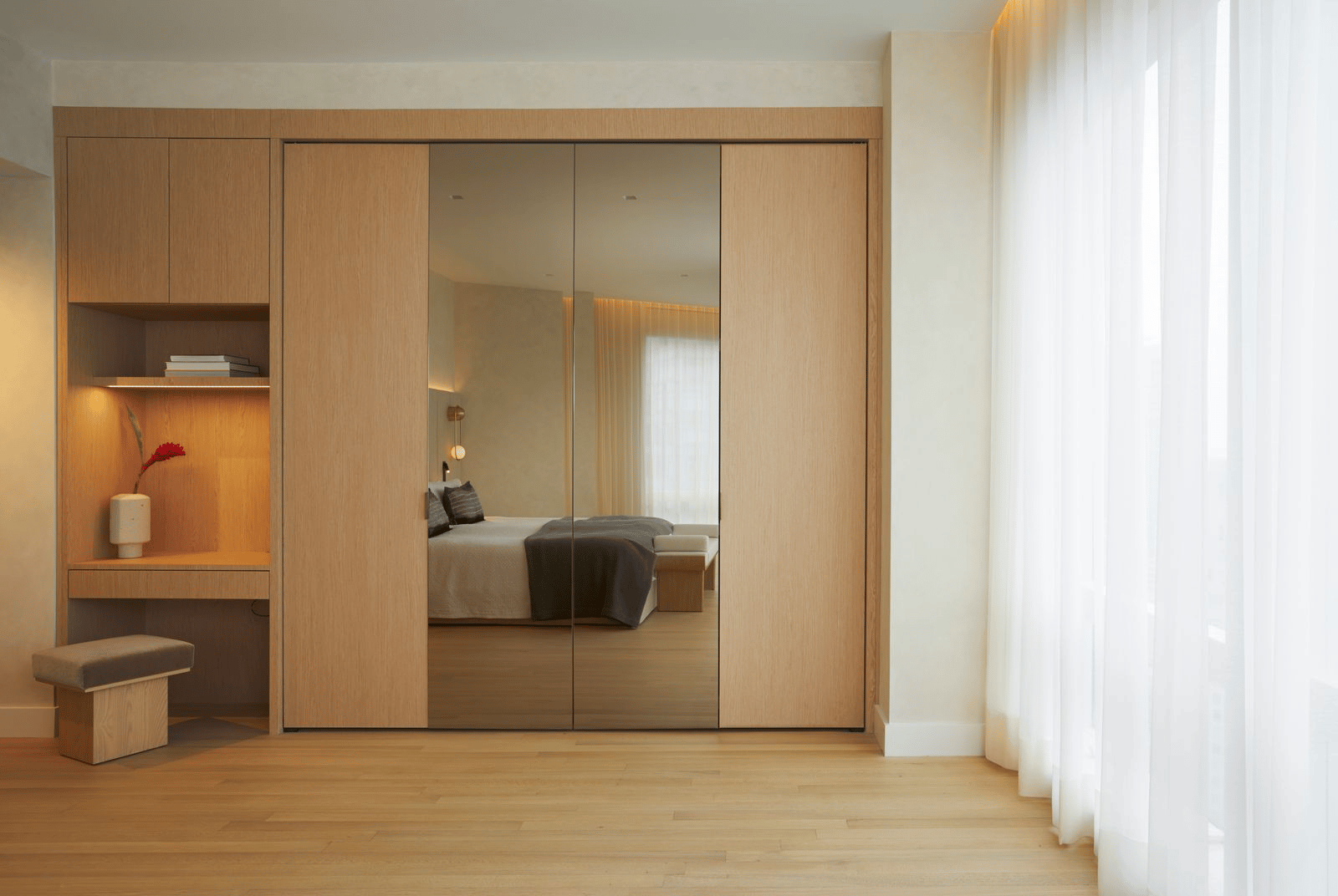
“At Legeard Studio, mirrors are not decorative afterthoughts but spatial tools,” says Julien Legeard, founder and principal designer at the eponymous New York firm, an AD Pro member. “In bedrooms and closets, we use them to dissolve boundaries, amplifying light and extending the perception of depth.” But Legeard doesn’t simply slap the mirror on a closet door, he integrates the reflective surface into the millwork, treating the element as an architectural “instrument of light.”
Go pattern on pattern
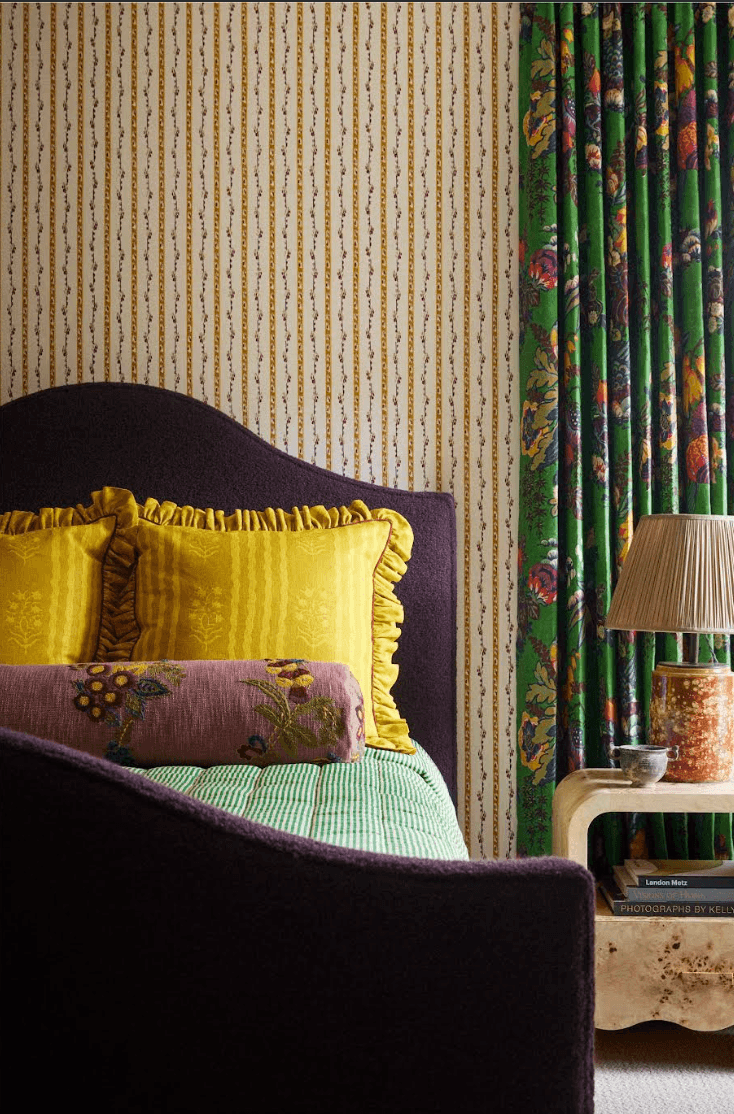
Embrace your inner maximalist. “Layered patterns, textures, and colors are visually arresting and create the feeling that a room is spacious enough to accommodate them all, distracting from the room’s small dimensions,” says Houston, Texas, designer Meg Lonergan, an AD Pro member. Playing around with bedding is an easy way to accomplish this. Look for quilts and throw pillows in contrasting patterns and hues. Pairing gingham with block-printed florals is one way to get started. And if you add ruffles or scalloped detail, even better.
Trick the eye
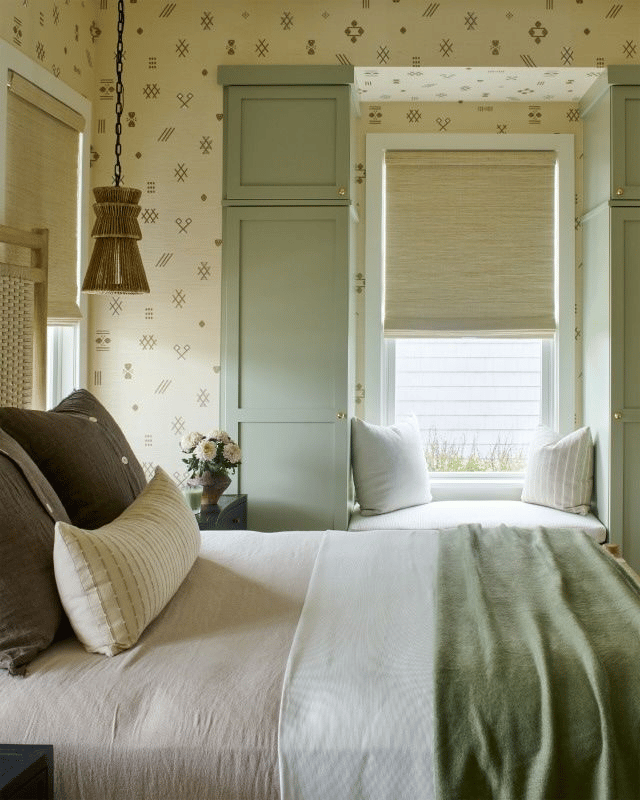
“The custom cabinetry flanking the window was designed to read like extended architectural shutters, subtly widening the perceived footprint of the wall,” says Stephanie Kraus, owner and creative director at Stephanie Kraus Designs, an AD Pro member in Wayne, Pennsylvania. The vertical lines of the millwork detail against the textured wallpaper draw the eye upward, as does the pendant reading light by the bed. “The window seat draws attention to natural light, reinforcing openness,” she adds. “Every element was scaled intentionally. The result feels calm, balanced, and deceptively spacious.”
Create geometric zones
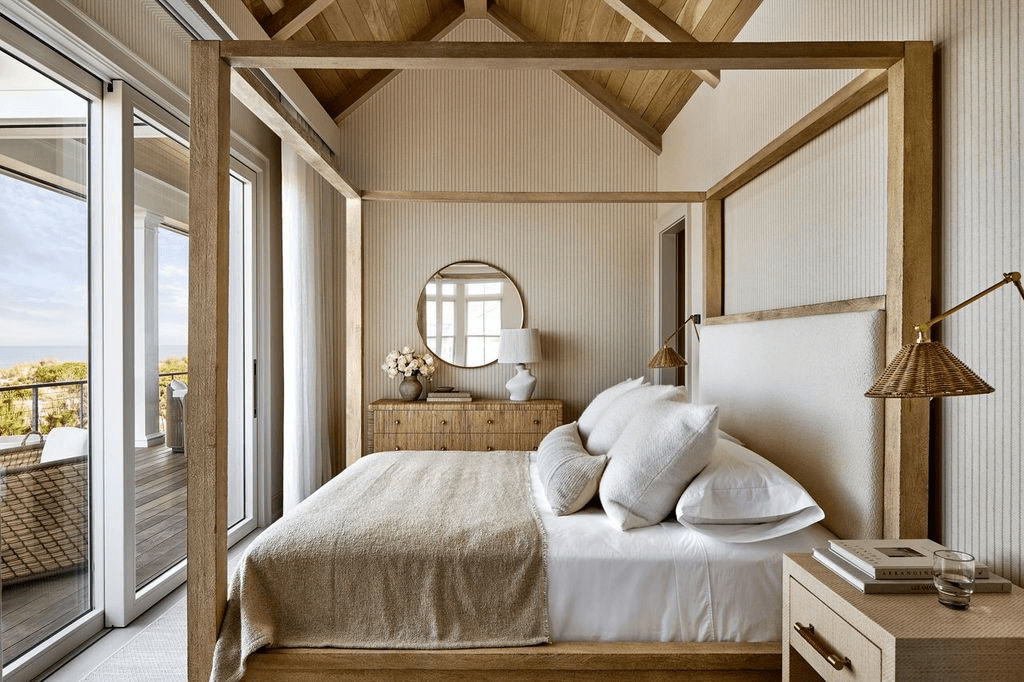
Use the bed as an architectural anchor. Rather than treating the bed as furniture, Kraus used the linear frame of a canopy bed to echo the pitch of the ceiling to create “layered geometry” that takes up volume but not visual space. Implementing a restrained and tonal palette allows the intersecting lines to feel soft rather than busy. “The bed frame establishes a defined space within the room, almost like a room within a room,” she adds.
Layer monochromatic textures
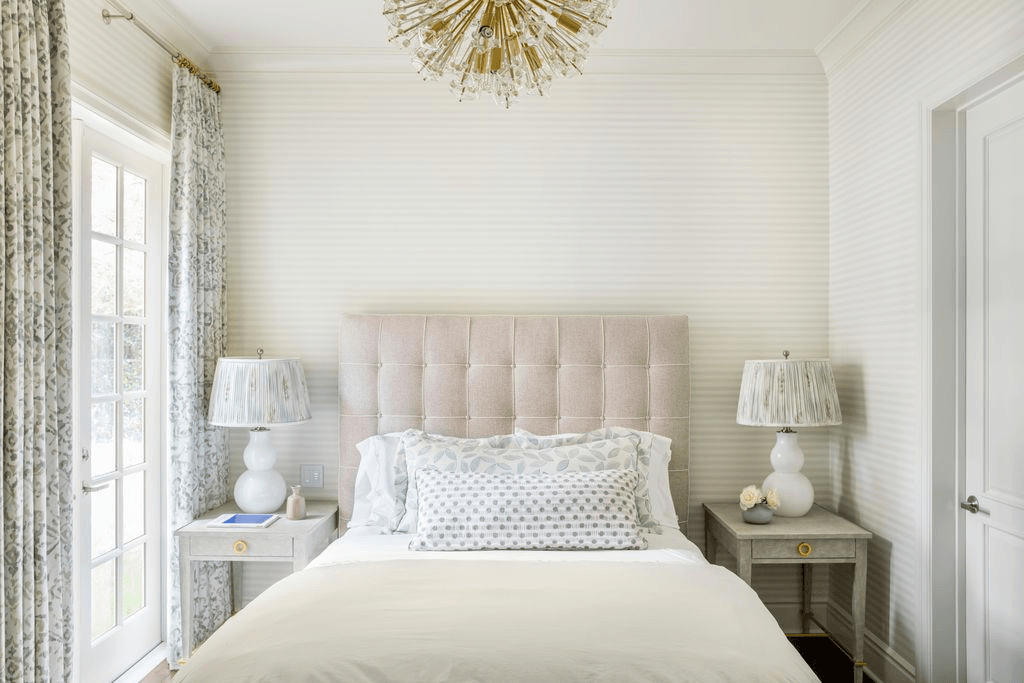
Lighter colors diffuse sunlight and reflected throughout a small bedroom. Christine Markatos Lowe, principal designer of Christine Markatos Design, an AD Pro member in Santa Monica, California, takes it further by layering soft, monochromatic hues and textures—like the tufted headboard—to add depth and variation that lets the eye travel across the entire room. As a finishing touch, she uses a statement light fixture “to pull the gaze upward, elongating the space and enhancing the sense of height.”
Go big on curtains
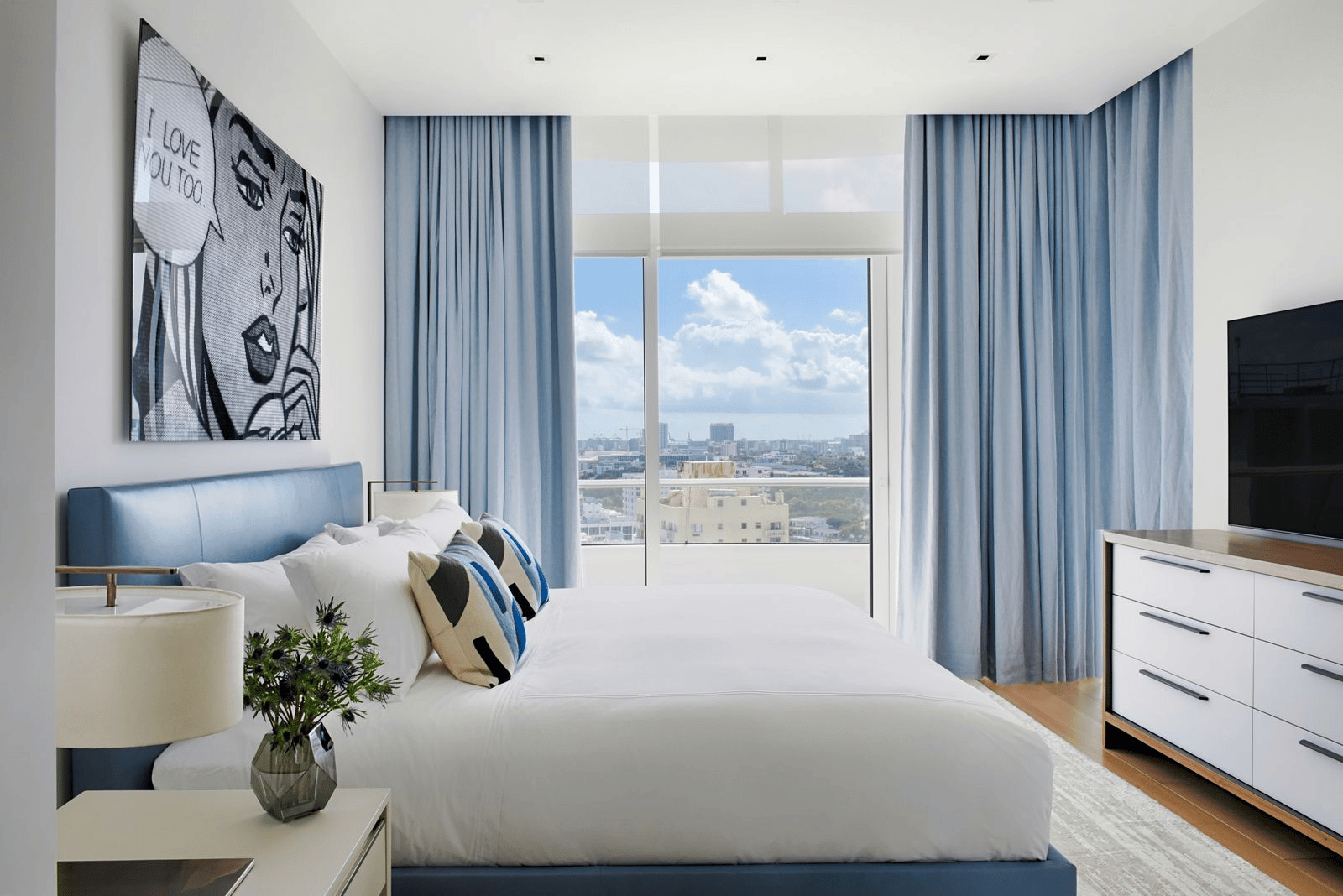
“Full-height curtains emphasize verticality, drawing the eye upward and creating the illusion of higher ceilings,” says Fatima Silva, founder and principal of FDG Design Group in San Francisco. Alternatively, selecting scaled furniture with a low profile enhances the negative space. Adding a large rug further anchors a small room and prevents fragmentation and a break in sigh lines. Once the major design players were set, Silva used minimal, yet interesting, artwork and white bedding to keep the room in equilibrium.
Punctuate white with pastels
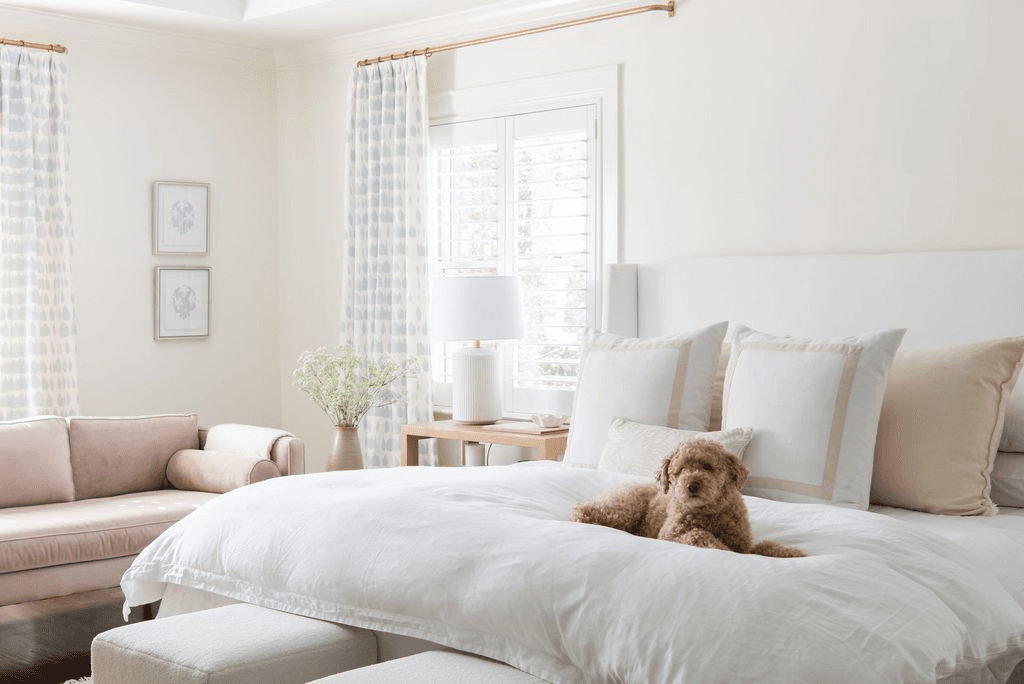
A white bedroom is the definition of airy. To keep it from falling flat, Nashville, Tennessee interior designer Elizabeth Burch adds a touch of creams and pastels to the layers of white, imparting warmth. A simple way to accomplish this is investing in quality linens, like this embroidered sham and duvet cover by Sferra. If your space has room for seating, a love seat in pink-velvet upholstery will do the trick.
Go bold with colors and patterns
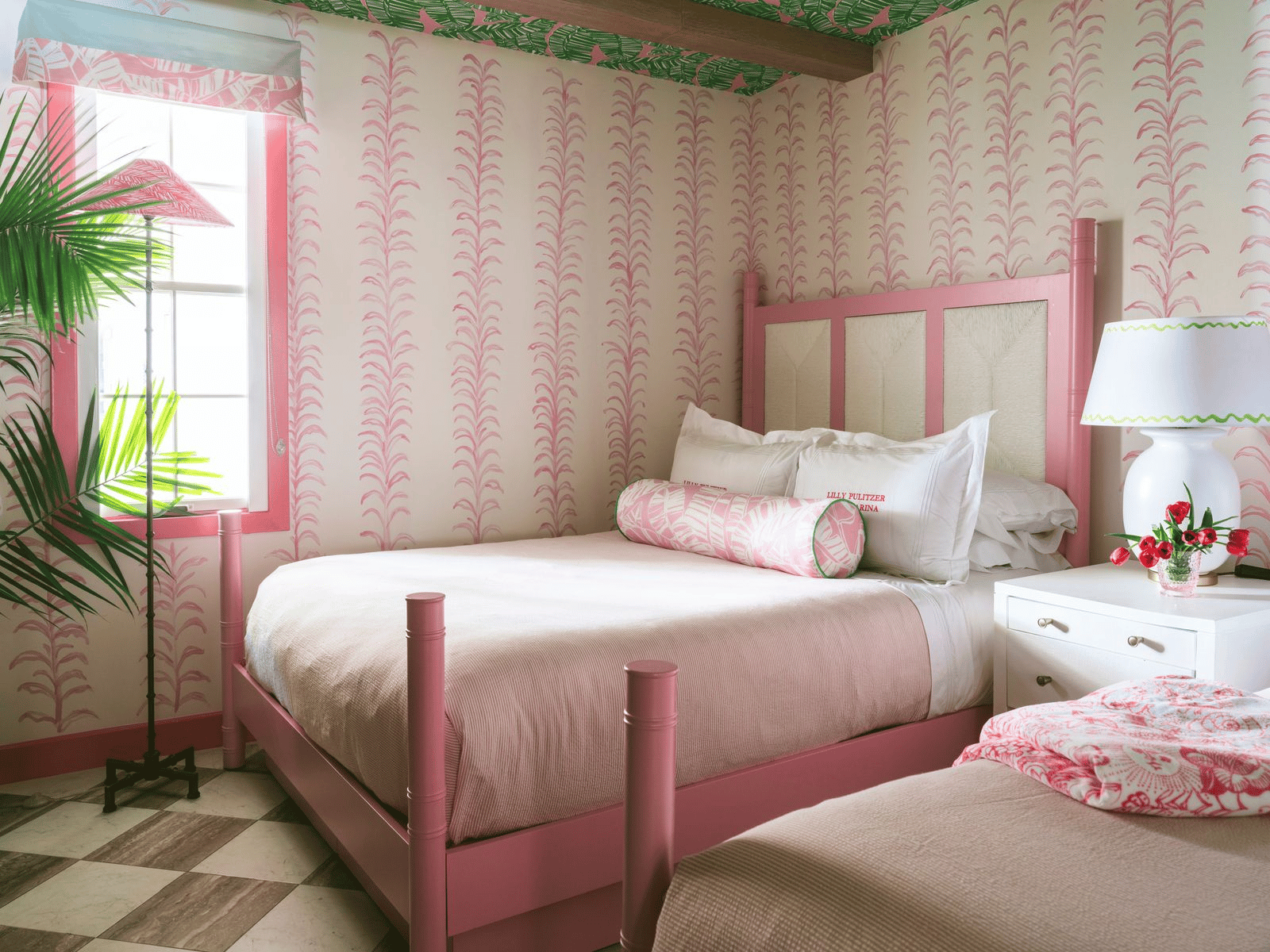
Older houses tend to have smaller rooms. If that’s the case with your home, take a page out of the Lilly Pulitzer suite at Casa Marina Key West, a historic 1920 landmark property which worked with Palm Beach, Florida-based interior designer Amanda Reynal to curate the archival prints and fluorescent color palette that inject the suite with energy via bold colors and vertical shapes. The pink vines are even better than stripes as they “grow” up the walls to the ceiling, which is wallpapered with lively Lilly Pulitzer x Lee Jofa banana leaf foliage. (There is no way you won’t look up!) A four-poster bed with a paneled headboard, as well as painted window trim, further enhances the colorful narrative.
Originally published in Architectural Digest
Text by Yelena Moroz Alpert