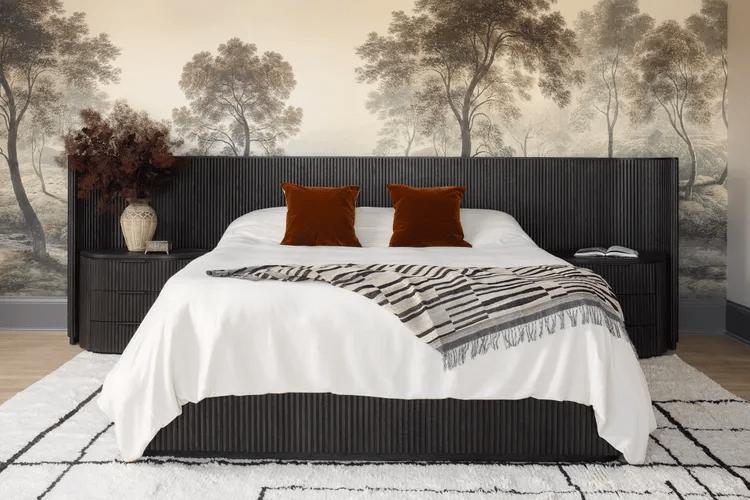
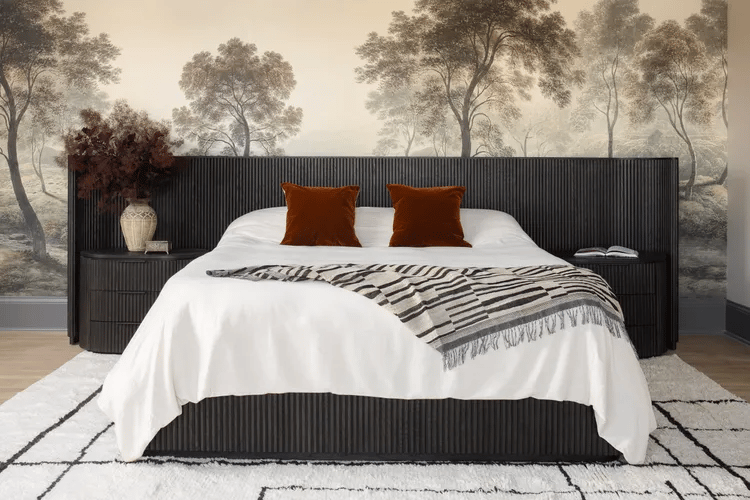
As murals have shifted from bespoke statements to mass-market staples, it’s fair to wonder: Are they still basking in the spotlight, or is it time to peel them back?
We tapped a design pro to weigh in on whether wall murals are still the decor du jour—and if they are, how to pull one off in a way that feels intentional and cool.
Are Mural Walls Actually 'In' This Year?
“Wall murals are absolutely an 'in' choice for 2026,” says designer Marissa Van Noy, who notes that she's already incorporating them into spaces this year through tapestry-inspired wallpaper and scenic murals.
While some think that wallpaper can substitute for a mural, there are certain untouchable elements of a mural wall that are unique.
“There's something special about a wall mural that goes beyond typical wall art. It tells a story and creates an entire mood in a room rather than just filling a blank space,” she says.
Part of the beauty of wall murals she explains is that they allow you to layer textures, colors, and patterns in a way that adds dimension to a room.
“A lot of people like to say less is more, but I'm a more is more kind of girl when it comes to design, and murals are a wonderful way to embrace that philosophy while still creating a cohesive, intentional space," Van Noy says.
How to Pick A Wall Mural
A wall mural is more than a backdrop; it sets the tone for everything around it. Here’s how to select one with confidence.
What Mood Do You Want to Set?
Atmospheric landscapes—like dense woodlands or sweeping pastoral scenes—tend to cultivate a cocooning effect, making a room feel cozy. In contrast, more abstract murals with bold colors instantly lift the mood and energize a space.
How Many Walls Do You Want to Cover?
A single accent wall gives you the liberty to go bold, whether with color, pattern, or scale. But if your mural will surround the entire room, it often pays to choose something more subtle.
Murals with muted hues like gray and white or monochromatic schemes won't overwhelm your space or box you into a specific color palette.
What Subject Matter Speaks to You?
Because they echo the natural world, landscapes and botanical murals tend to be the easiest to live with; adding one is almost like adding an extra window to the room.
Graphic murals, on the other hand, like bold abstracts or large-scale shapes, tend to require a more intentional approach. Their lines and colors interact directly with your furniture, decor, and architectural details, so achieving balance takes careful pre-planning.
4 Ways to Decorate Around a Mural Wall
Repeat Colors
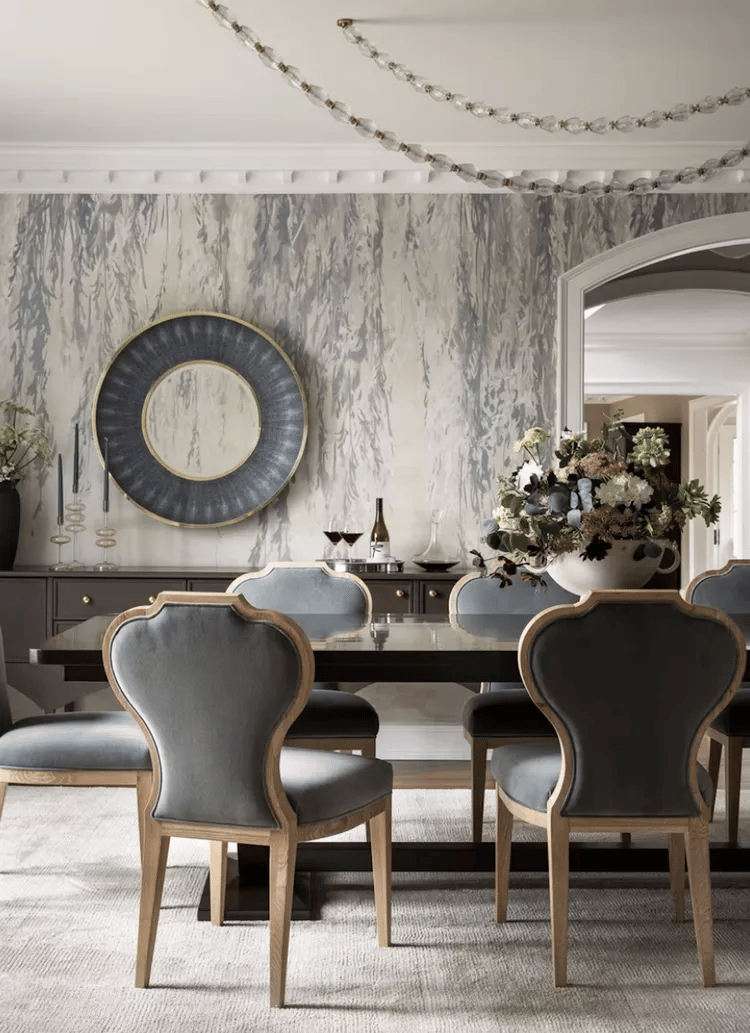
The key to a great wall mural? It should feel like it belongs, not like it’s crashing the party. To pull this off, Van Noy recommends repeating colors found in your mural around the rest of your space.
"Start by pulling a few colors from the mural and repeating them in smaller touches throughout the space through pillows, throws, or decorative items,” Van Noy says. “This creates continuity without competing with the mural itself.”
Along the same lines, it’s smart to keep a surplus of color in check. Too many competing hues can make a room feel busy.
Light It Right
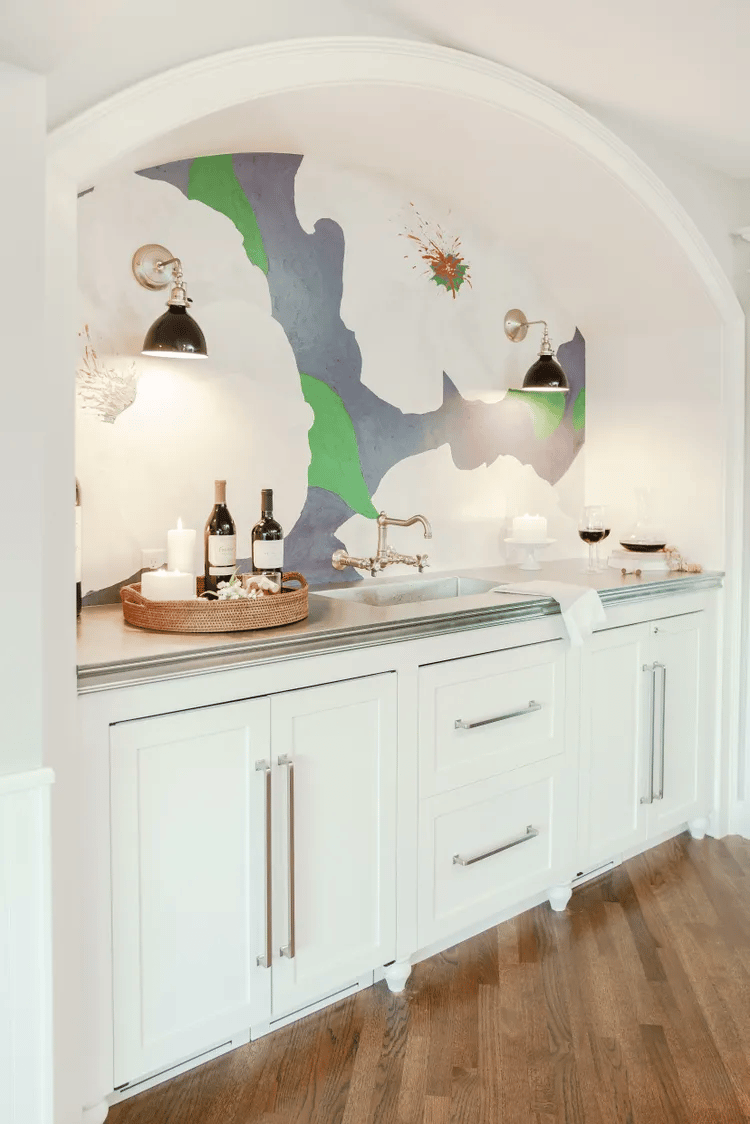
Even the boldest mural can lose its impact if it’s left in the dark. That’s why Van Noy says thoughtful lighting isn’t optional—it’s essential.
“Lighting is everything,” she says.
She encourages not just ample overhead lighting, but accent lamps, placed around the room that are capable of casting a glow on the mural to draw eyes back to it in the evenings.
Don’t count out sconces, either. There’s often a temptation to leave a mural wall bare because it already makes such a statement, but the right lighting can take a mural from “wow” to “wow, perfectly done.”
Accent It with Vintage
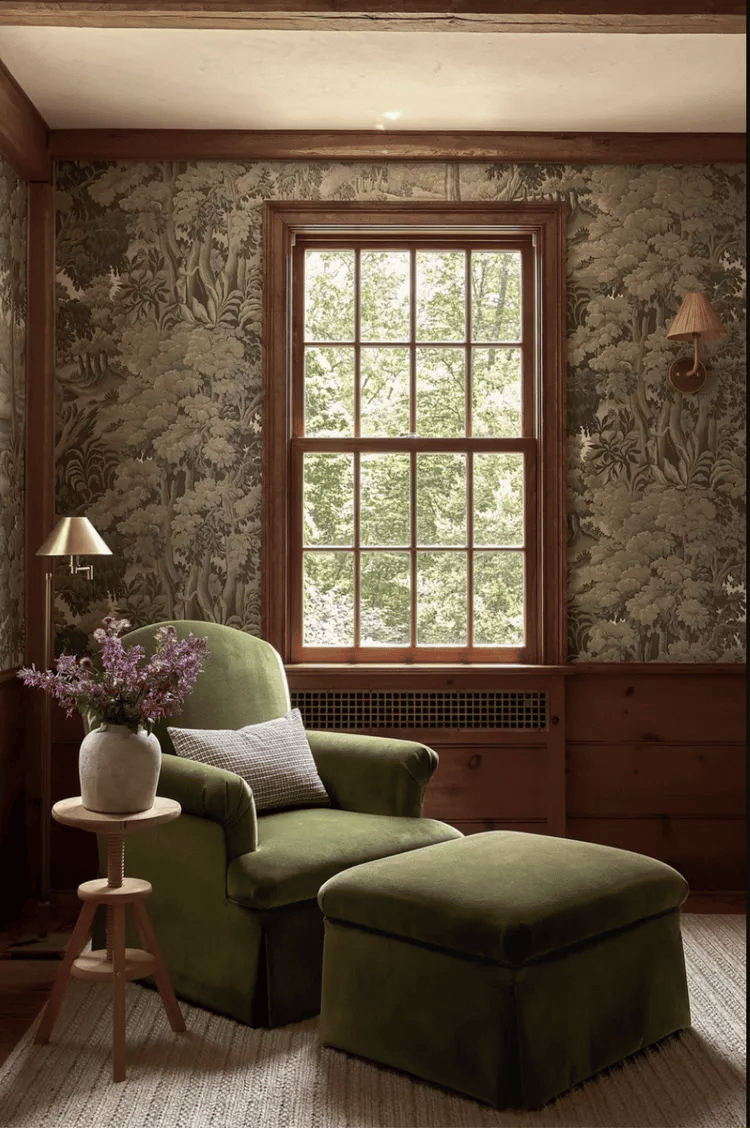
Wall murals come with a built-in theme—maybe the great outdoors, a garden in bloom, or the night sky.
“Don't be afraid to layer in vintage or secondhand pieces that complement your mural's story," Van Noy advises.
For a historically inspired mural, pairing it with an antique lamp or a classic piece like a Wingback chair or Chesterfield sofa can make the room feel as if it’s been in perfect conversation all along.
For a romantic landscape, leaning into pieces that echo the same dreamy mood—a French bergère chair or a gilded Louis Philippe mirror—can carry the sentiment through the space.
The goal isn't to turn your space into a theme-y soundstage, but to let the your decor wink at the mural and play along.
As Van Noy notes, the right mix “can make the whole room feel more curated and intentional.”
Layer It with Greenery
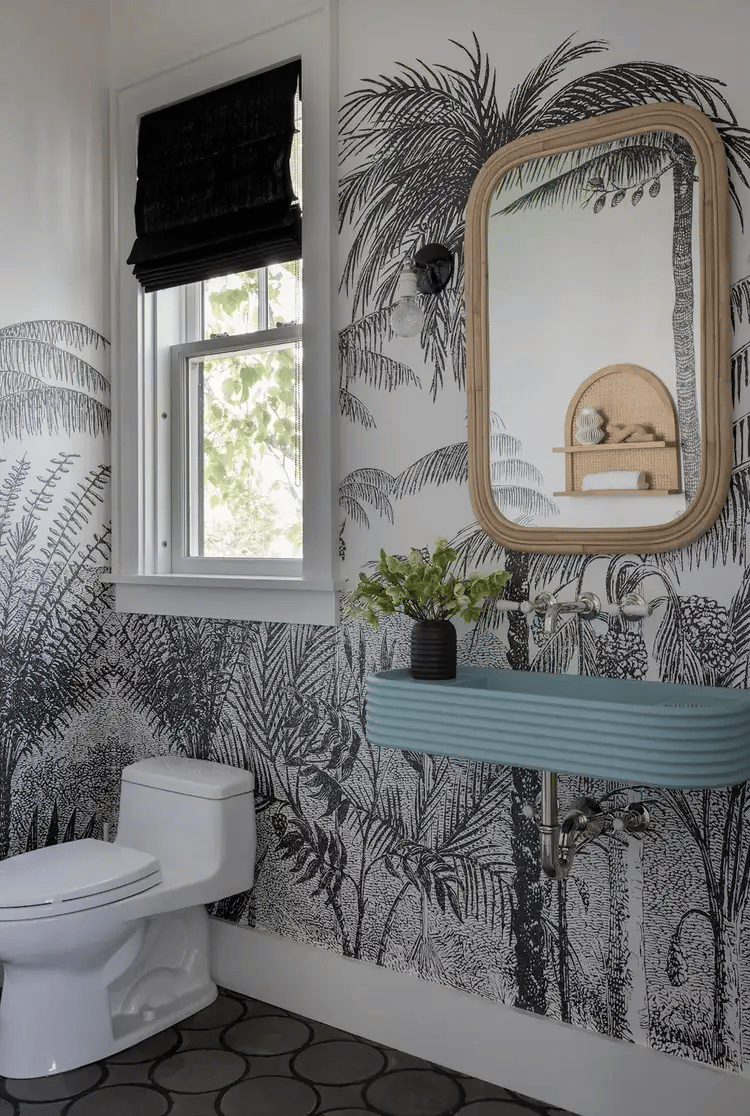
While murals add drama, their scale and color can sometimes tip the balance of a room. Van Noy counters this by layering in live greenery.
“Bringing in natural elements like greenery or fresh flowers can balance the visual weight of the mural and create a lush, inviting atmosphere,” she says.
If you’re unsure which plants to bring in, start by studying your mural for shapes, textures, or colors you can echo in your greenery. Fiddle-leaf figs, with their bold, rounded leaves, pair beautifully with round motifs, while palms, with their slender, whispery fronds, are perfect for accenting more delicate or intricate prints.
Originally published in The Spruce
Text by Marisa Suzanne Martin