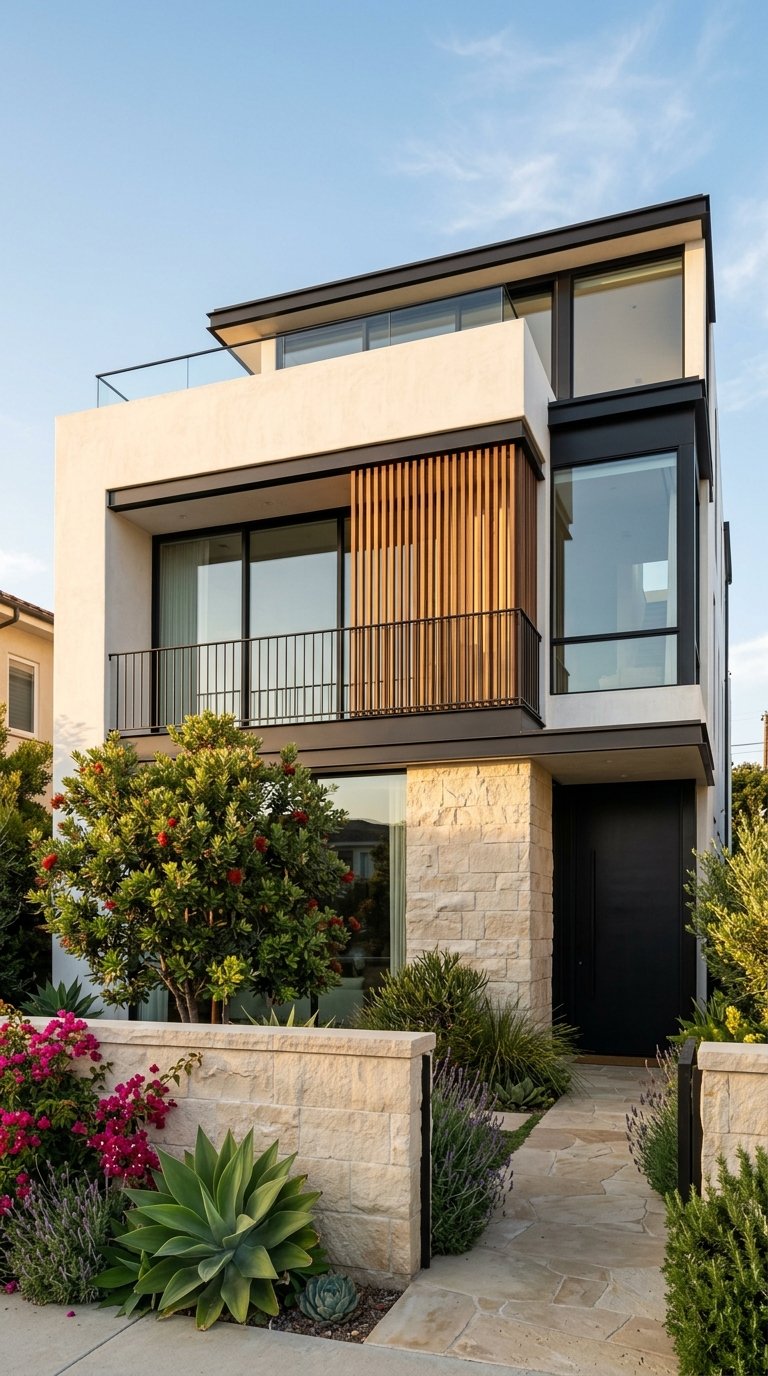
Ever wonder why Corona del Mar Village feels so visually rich even on a short walk? In just a few blocks, you can move from intimate early cottages to theatrical landmark buildings and quietly striking modernist work, all shaped by a compact coastal grid that still guides how the village looks and feels today. If you love architecture, neighborhood character, or both, this stroll will help you see Corona del Mar with a more informed eye. Let’s dive in.
Why Corona del Mar Village Stands Out
Corona del Mar is a district of Newport Beach, not a separate city, and that distinction matters when you read the village through an architectural lens. It is both a residential enclave and a compact pedestrian commercial district, with bluff-top coastal setting, flower-named streets, and a layout that still feels distinctly village-like.
That layered identity is not just nostalgic. The City of Newport Beach continues to study the commercial corridor with a focus on walkability, connectivity, parking, safety, mobility, and corridor identity, which shows that the village’s pedestrian character is still an active part of its future.
The 1904 Grid Still Shapes the Walk
One of the most important facts about Corona del Mar Village is also one of the easiest to miss. In 1904, George E. Hart subdivided the land into roughly 2,300 parcels on 30-by-120-foot lots, creating a pattern that still influences architecture, massing, and street rhythm today.
The north-south streets became the Flower Streets, while the east-west streets were reorganized into the numbered pattern you still see. When you walk the village now, you are moving through a framework laid down more than a century ago, and that gives the neighborhood an unusual sense of continuity.
This tight lot pattern helps explain why so many homes feel inventive rather than expansive. On compact parcels, architecture tends to grow upward or toward the rear, which is why porches, second-story decks, roof terraces, courtyards, and narrow side passages appear again and again.
Start on East Coast Highway
If you want to experience the village as a sequence, begin on the East Coast Highway commercial strip. This part of the walk captures Corona del Mar as a main-street environment, where storefronts, pedestrian energy, and tightly spaced buildings create a different tempo than the residential blocks just a few minutes away.
This is also where you can appreciate how the village balances history with ongoing change. Newport Beach’s current planning work around the commercial corridor reflects a simple idea: this stretch is important not only because people drive through it, but because people experience it on foot.
Look for a Distinctive Modernist Retail Building
One of the most compelling design moments on the highway is a Lloyd Wright-designed retail building. The Corona del Mar Historical Society highlights its diagonal masonry walls, teak eave pattern, and interlocking corners, all of which make it one of the village’s most memorable modernist commercial structures.
It is a useful reminder that Corona del Mar’s design story is not limited to beach cottages or newer coastal homes. Even in the commercial core, you can find architecture with a strong point of view and real material presence.
Move Into the Flower Streets
From the commercial spine, head into the interior residential blocks. This is where the village becomes more intimate, and where the original subdivision pattern is easiest to feel in the cadence of narrow lots, close street edges, and homes that negotiate light, privacy, and outdoor space with creativity.
The Flower Streets often reveal Corona del Mar at its most personal. Here, architecture is less about grand gestures and more about proportion, porosity, and how a house meets the street.
Early Cottages Tell the First Story
The earliest architectural layer in Corona del Mar Village comes from its resort-era cottage and beach-house fabric. The historical record points to the Burton family’s Happy House on Ocean Boulevard as the first house in Corona del Mar, while 214 Dahlia Avenue is identified as the oldest surviving home in the village, built in late 1910.
That Dahlia home is especially telling because of its early front porch, which once had unobstructed bay and ocean views. It captures a core idea that still defines the village: simple forms, outdoor living, and a direct relationship to breeze, light, and horizon.
Cottage Does Not Mean Ordinary
A Corona del Mar cottage is not just a smaller beach house. In this village, the cottage tradition often reflects the constraints and opportunities of narrow lots, where every porch, deck, stair landing, or balcony helps expand how the house lives.
That is why older homes here can feel surprisingly spatial despite modest footprints. They often stay relatively low and open at the street, then reach upward or backward to borrow air, light, and views.
Notice the Eclectic Landmark Layer
As you continue walking, another side of Corona del Mar comes into focus. Alongside cottages and straightforward coastal houses, the village also has a more whimsical, theatrical architectural streak that gives it a broader personality.
The 1929 China House once featured an oriental roofline, ornate fixtures, and a gold-leaf dragon. The 1936 Hurley Bell, now known as Five Crowns, was modeled after an English inn, while Big Spanish at Ocean and Poppy remains one of the recognizable markers of the old village.
Taken together, these buildings explain why Corona del Mar does not read as stylistically uniform. It can feel beachy, storybook, and slightly dramatic all at once, which is part of what makes a walk here so memorable.
Head Toward Ocean Boulevard
As the route opens toward Ocean Boulevard, the architecture begins to interact more directly with the bluff-top setting. Here, the experience becomes less about storefront rhythm and more about outlook, edge conditions, and the way homes respond to topography and coastal exposure.
This part of the village is useful for understanding how setting shapes design. The bluff is not just scenic backdrop. It influences how buildings are massed, where outdoor rooms are placed, and how architecture frames views without losing connection to the street.
Bluff Conditions Shape the Architecture
Newport Beach’s zoning framework treats Corona del Mar as a distinct coastal district, with a specific setback map and separate bluff-overlay maps for nearby coastal areas including Ocean Boulevard and Breakers Drive. The city code also allows roof overhangs, brackets, cornices, and eaves to encroach into setbacks by up to 30 inches.
That may sound technical, but the visual result is easy to understand on foot. Many of the village’s most appealing homes use eaves, balconies, porches, terraces, and trellised outdoor spaces to preserve light and air while making tight sites feel more generous.
Watch for Modernist Work
For architecture-minded walkers, some of the most interesting discoveries in Corona del Mar are the modern and post-and-beam influences tucked into the village fabric. They do not always announce themselves loudly, but once you know what to look for, they add a whole new layer to the stroll.
Preserve Orange County notes that architect Ron Yeo opened a Corona del Mar office in 1963 and worked with post-and-beam logic and large expanses of glass to open interiors to the outdoors. The Hall House in Corona del Mar is identified as a 1967 Yeo project, and a 1979 studio-residence in the village has been described as an anti-cottage.
What Modernism Looks Like Here
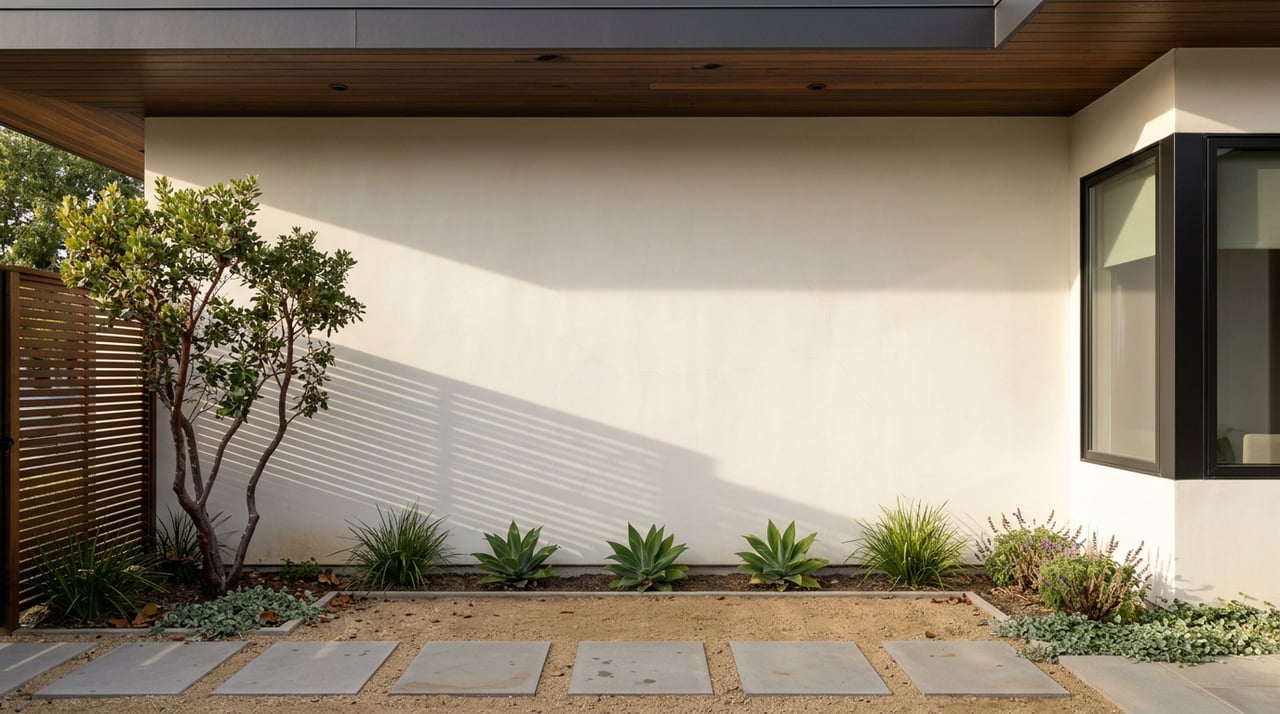
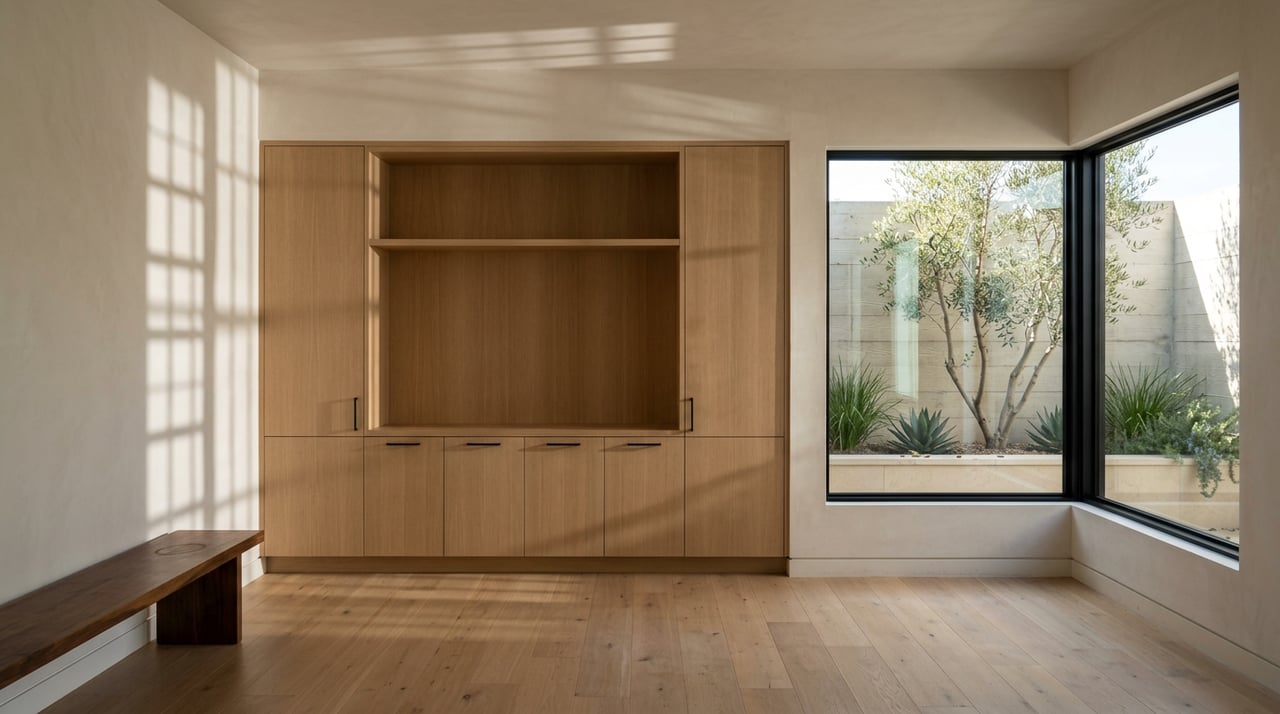
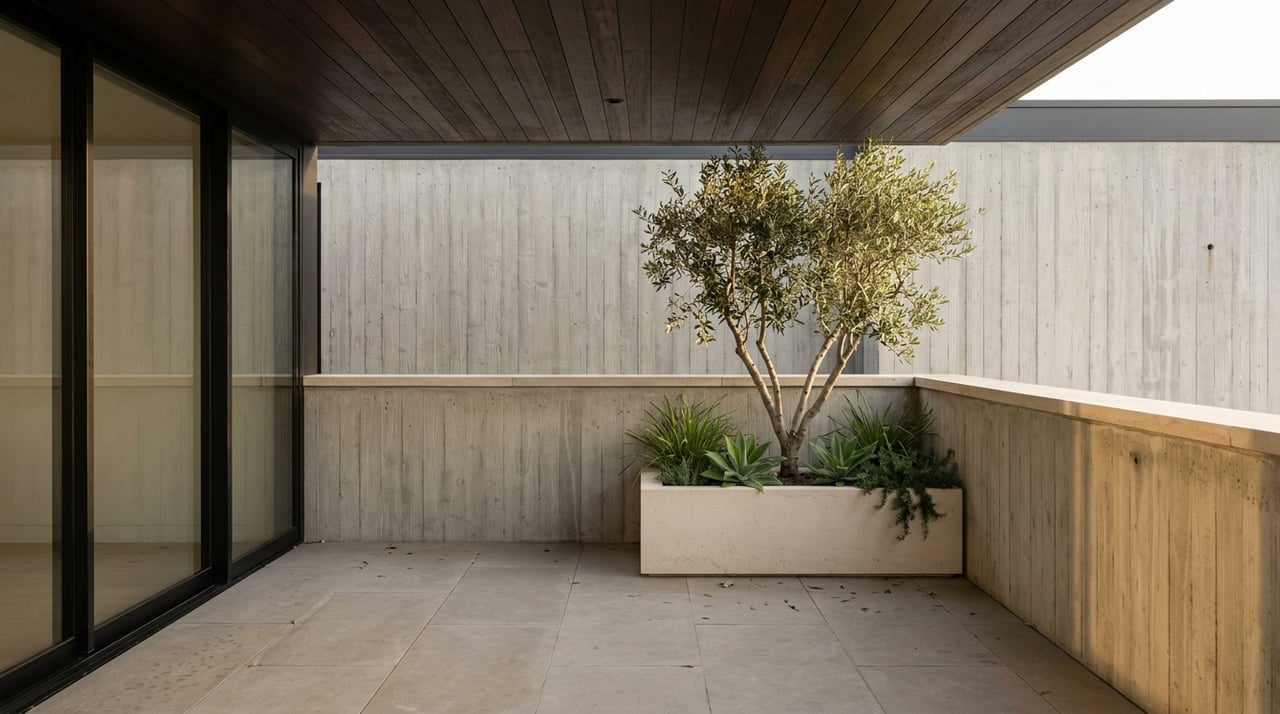
In Corona del Mar, modernist work often feels less monumental than adaptive. Instead of overpowering the village scale, the best examples respond to the same pressures as the cottages: compact lots, outdoor living, filtered light, and the desire to open upward or outward.
That is what makes the contrast so interesting. Early cottages and later modernism may look very different, but both are often solving the same coastal design problem in different architectural languages.
Cross to the Goldenrod Footbridge
No architectural stroll through the village feels complete without the Goldenrod Footbridge. Added in 1928, it is part of the area’s historical sequence after annexation by Newport Beach in 1924 and the arrival of Coast Highway in 1926.
The footbridge is more than a connector. It helps tell the story of Corona del Mar as a place shaped by movement, views, and the relationship between everyday village life and the larger coastal landscape.
Finish Near China Cove and Poppy
A strong ending to the walk is the China Cove and Poppy edge, where the village’s residential identity, landmark history, and bluff-side drama all come together. This stretch reinforces how much variety is packed into a relatively compact area.
It is also where you can best appreciate the contrast between recognizable older markers and houses that evolved over time. The historical society points to examples like 2235 Pacific Drive, a 1936 cottage with decks on each level and broad bay-and-ocean views, and 427 Fernleaf Avenue, described as the village’s only Victorian after its transformation from a small 1944 cottage.
Those examples underline a larger truth about Corona del Mar Village. Its character does not come from one style. It comes from accumulation, adaptation, and the way each architectural generation responds to the same coastal setting.
What to Notice as You Walk
If you want to read the village more closely, focus less on style labels and more on recurring design moves. Corona del Mar becomes especially legible when you watch how buildings solve for light, air, privacy, and outlook on narrow lots.
Look for these details:
- Front porches that soften the transition from sidewalk to home
- Second-story decks and balconies that capture views above the street line
- Roof terraces and upper-level outdoor rooms on compact parcels
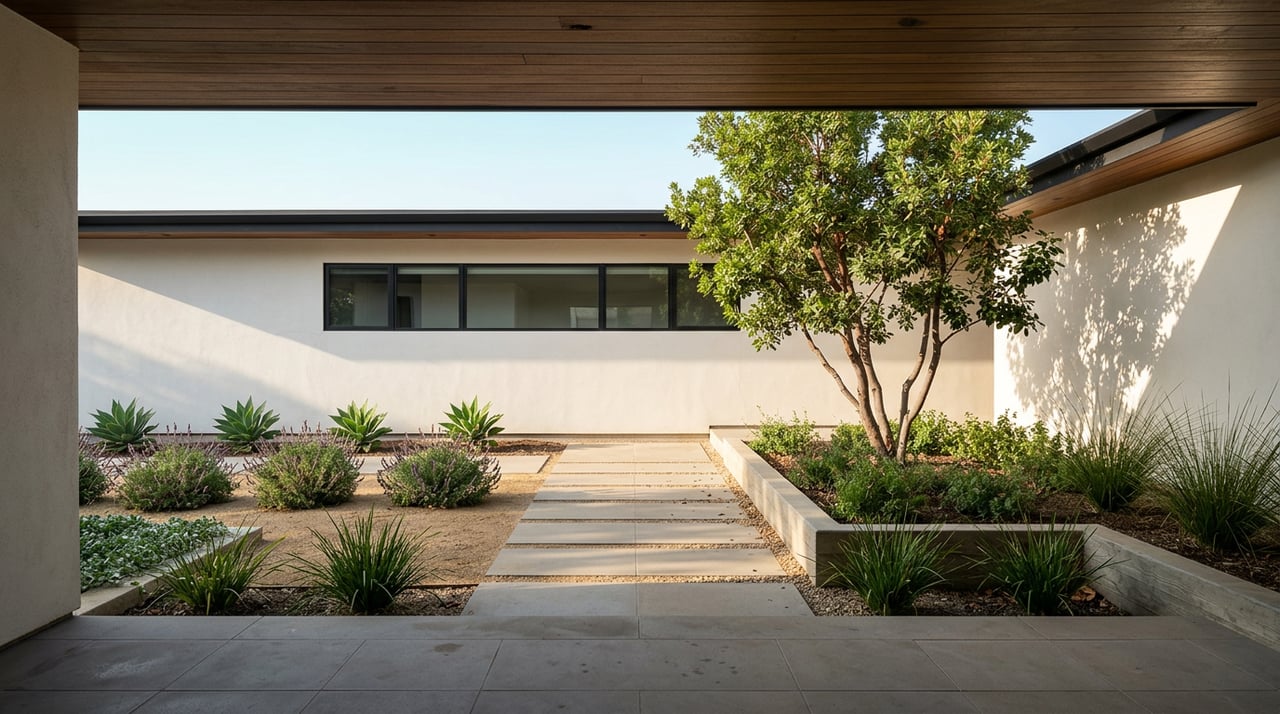
- Narrow side passages and courtyards that bring in light and breeze
- Eaves, trellises, and overhangs that create shade and articulation
- Shifts from cottage scale to more sculptural modern forms within the same walk
Why This Matters for Buyers and Sellers
In Corona del Mar Village, architecture is not just visual background. It is part of how value, identity, and daily experience are understood from block to block.
If you are buying, this kind of walk can sharpen your eye for what makes one property feel authentic, well-composed, or especially suited to its site. If you are selling, it is a reminder that provenance, architectural language, and neighborhood context can shape how your home is presented and understood.
That is especially true in a design-literate coastal market like Newport Beach, where buyers often respond to more than square footage alone. The story of a home, and how it fits into the village’s architectural layers, can matter just as much as the finish palette.
If you are exploring Corona del Mar Village with a design-first lens, bouHAUS brings local insight, architectural perspective, and boutique representation to help you navigate notable coastal homes with clarity and care.
FAQs
What is Corona del Mar Village in Newport Beach?
- Corona del Mar Village is a distinct area within the Newport Beach district of Corona del Mar, understood as both a residential enclave and a compact pedestrian commercial district.
What makes Corona del Mar Village architecture unique?
- Its architecture reflects several layers, including early cottages, eclectic landmark buildings, and later modernist work, all shaped by the original 30-by-120-foot lot pattern.
Why do Corona del Mar Village homes have so many decks and balconies?
- The village’s compact lots often push homes to grow upward or rearward, so porches, decks, balconies, roof terraces, and courtyards help capture light, breeze, and views.
Where can you spot modernist architecture in Corona del Mar Village?
- Modernist work appears in both residential and commercial settings, including a Lloyd Wright-designed retail building on East Coast Highway and later post-and-beam projects associated with Ron Yeo.
Why is the Goldenrod Footbridge important to Corona del Mar Village?
- The Goldenrod Footbridge, added in 1928, is part of the village’s early development story and helps connect its walkable neighborhood experience to the broader coastal setting.
How does the original Corona del Mar subdivision affect the village today?
- The 1904 subdivision established the tight grid, Flower Streets, and narrow lots that still shape street rhythm, home design, and the overall feel of the village.